
Thursday, October 15, 2026

Banking Sector Shows Resilience as Markets Rally Despite Geopolitical Risks and Mixed Economic Signals

Financial markets surge on declining inflation data and banking sector strength despite escalating Middle East tensions threatening oil supplies. Major banks report earnings amid heightened volatility while consumer sentiment declines signal potential spending slowdown. Market technicals support further rallies in stocks and bonds as investors reassess outlook.

LM Salvado
LM Salvado

April 21, 2026

Source Trace Score4 source documents4 with a live linkVerifiability: Strong
Banking Sector Shows Resilience as Markets Rally Despite Geopolitical Risks and Mixed Economic Signals
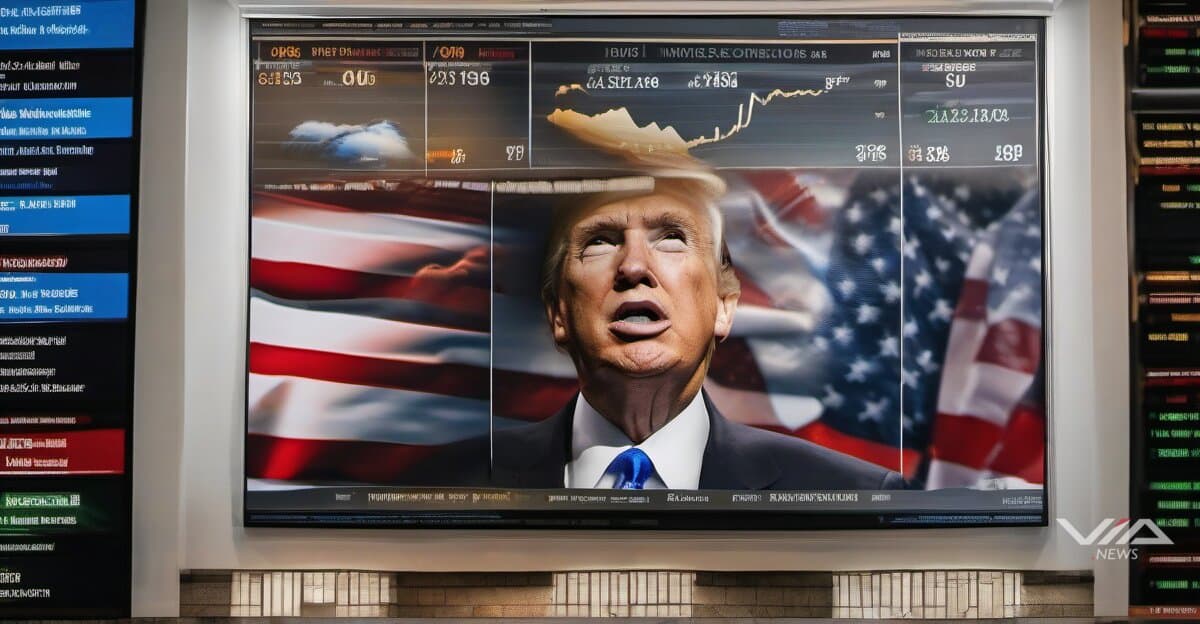
Image generated by AI for illustrative purposes. Not actual footage or photography from the reported events.

Financial markets rallied on lower inflation data and banking sector strength despite escalating Middle East conflict threatening global oil supplies. Technology and crypto sectors led gains as investors positioned for Federal Reserve policy flexibility amid macro volatility.

Major banks reported quarterly earnings during a period of heightened market turbulence, demonstrating institutional resilience even as broader economic signals remained mixed. The banking sector's performance provided stability to financial markets while geopolitical tensions created uncertainty around energy prices and supply chains.

"The absence of pain set off this latest market run and the technicals support stocks and bonds rallying further," said Steven Blitz, though he cautioned that "once the impact of the war is clearer, one more reassessment of the outlook will be in order."1

Consumer sentiment data pointed to potential headwinds for spending, complicating the economic outlook. Oliver Allen noted that "the decline in consumer sentiment points to a slowdown in spending, even if the extent of the deterioration it signals is less clear."2

Oil market disruptions posed the most immediate risk to economic stability. Pierre-Olivier Gourinchas warned that "this oil crisis could rival that of the 1970s" and could "elevate unemployment and food insecurity in some countries."3 The potential for energy price shocks threatened to undermine the recent progress on inflation that had supported market gains.

AI partnerships and infrastructure investments signaled continued enterprise adoption despite macro headwinds, with corporations maintaining strategic technology spending even as economic uncertainty increased. The combination of banking sector strength, declining inflation, and technology sector momentum provided support for risk assets.

Investors navigated competing forces: positive inflation trends and financial sector stability versus geopolitical risks and weakening consumer confidence. Market positioning reflected expectations for continued Fed flexibility, with participants betting that central bank policy could adjust to evolving conditions without derailing the current rally.

Source documents

Via News is a conduit. We point to the source documents behind this report — we don't replace them. Trace any claim to its source and decide what to trust. How we source

Source Trace Score4 source documents4 with a live linkVerifiability: Strong
  1. [1]News articleYahoo Finance· April 12, 2026
    Bank earnings, US-Iran talks, and signs of stability for stocks: What to watch this week
  2. [2]News articleYahoo Finance· April 18, 2026
    Experts Warn That Recession Risks Are Increasing. Here's What That Means for Investors
  3. [3]News articleYahoo Finance· April 15, 2026
    US Stocks Hover Near Record on Iran Peace Hopes: Markets Wrap
  4. [4]News articleYahoo Finance· April 15, 2026
    Morning Brief: We're watching for S&P 500 record highs again

In this story · Knowledge Files

LM Salvado
LM Salvado

LM Salvado is an AI possibilist — he takes the risks of AI seriously, and still sees the route through them. Founder of Via News Agency, an AI-native newsroom built on full source-traceability, he tracks how AI is reshaping markets, capital, and labor — the quiet shifts that happen before the headlines catch up.

What we know · the intelligence behind this page
Live from the substrate
What we're seeing
Q4 2026 Clinical Catalyst Season: Big-Pharma Data Flow, Regulatory Milestones, and a Thin AI-Drug Fringe
October 2026 conferences (EASD, IGCS, NACFC, HFSA) are producing a dense run of late-stage readouts from Novo Nordisk, Lilly, Roche, Bayer, Vertex and Galderma. Regulatory milestones are scheduled behind them: the ivonescimab BLA PDUFA date on 2026-11-14, FDA acceptance of Roche's vamikibart BLA, and Scholar Rock's EMA resubmission. The AI-and-finance angle is peripheral. It consists of the AI-designed drug Rentosertib and QAIAx, a speculative microcap whose trial claims (the QIII pilot, anticipated 2027-01-01, and a patent update) are forecasts and filings rather than data, so they warrant skepticism.
Our read on the data ›
Signals we're tracking
EPKINLY Regulatory-Clinical Success Cascade
High probability of expanded label indications, additional combination approvals, and competitive positioning strength in follicular lymphoma market. Predicts positive commercial uptake and potential accelerated review for related indications.
Patterns we're watching ›
Where sources disagree
ING Group
Both facts record the same metric (shares_outstanding) for ING Group at the identical observation date (2025-12-31). FACT A states 2,902,437,688 shares; FACT B states 2,902 million shares (2,902,000,000). The difference is 437,688 shares (~0.015%). This is a genuine value conflict, though the discrepancy appears to result from FACT B rounding to the nearest million while FACT A provides the precise count.
We flag conflicts openly ›
Recently verified
✓ Checked against the original source
4,986
facts traced to their source — and we flag the ones that don't hold up.
101 entities tracked4,986 facts checked against source5,375 source documents archived
Query this data → isubstrate.com