
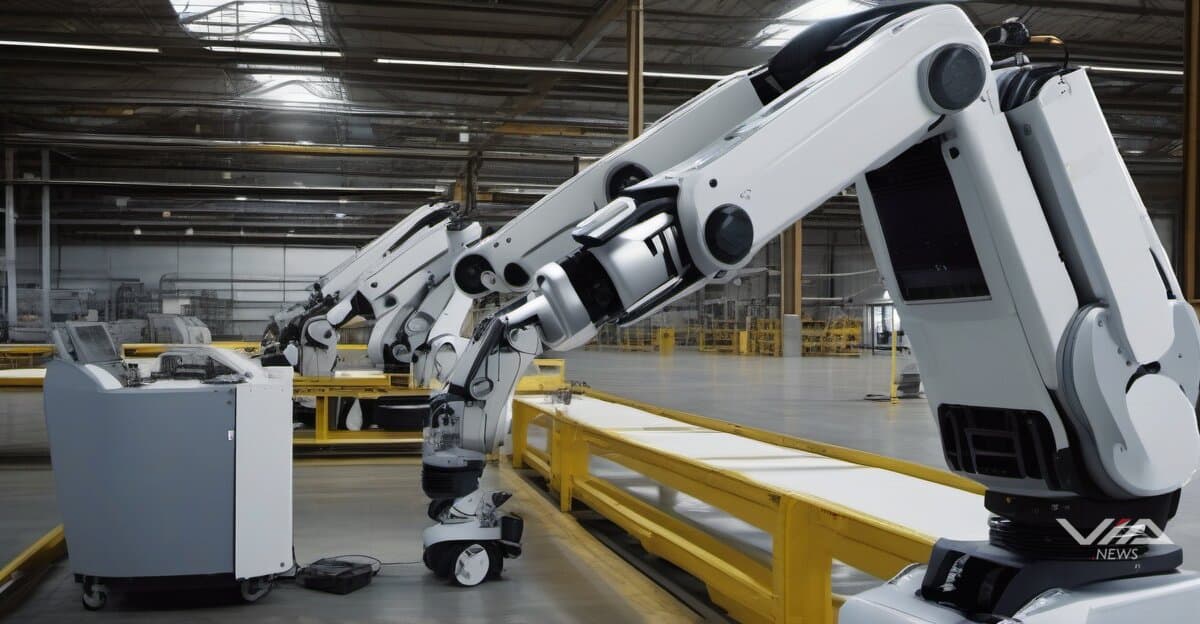
Boston Dynamics is deploying its Atlas enterprise platform commercially while conducting final testing on the research version to push full-body control and mobility limits, according to company announcements. The dual-track approach marks the company's transition from demonstration videos to revenue-generating deployments.
Mobileye acquired Mentee Robotics to access AI infrastructure and commercialization expertise for humanoid robot deployment. Prof. Lior Wolf said the partnership accelerates the mission to bring scalable, safe, and cost-effective humanoid solutions to market.
The robotics industry is shifting from research phases toward commercial-scale deployment across multiple sectors. Product launches scheduled for 2026-2028 include autonomous delivery vehicles from Nuro, exoskeletons from Lifeward ReWalk, and Robotics-as-a-Service models in food processing from Chef Robotics and Sojo Industries.
Infrastructure developments support the commercialization wave. Nokia and NVIDIA formed AI-RAN partnerships to build network capabilities for autonomous systems. Regulatory milestones are advancing, though adoption patterns vary across sectors.
Industrial automation and assistive technologies represent key deployment areas. Companies are moving from prototype demonstrations to contracted installations with revenue commitments. The transformation affects autonomous vehicles, manufacturing automation, healthcare assistance, and food service operations.
Investment patterns reflect the transition from R&D funding to commercial growth capital. Companies with scheduled product launches are attracting acquisition interest and partnership deals focused on scaling production rather than technology development.
The technology foundation relies on advances in AI-powered control systems, sensor integration, and mobility algorithms. Engineers at Boston Dynamics and partner institutions including the RAI Institute are testing control limits to establish performance boundaries before wider enterprise deployment.
Mathematics and engineering fundamentals remain critical for robotics development. Xiangyi Cheng, working on AR applications for classrooms and hospitals, emphasized that math is the foundation behind everything in engineering, despite the hands-on appearance of the field.
The commercial deployment wave carries an overall bullish sentiment with improving trajectory, though confidence levels remain at 82% as adoption patterns continue developing across varied sector applications.