
KLA and other semiconductor manufacturers forecast mid-to-high teens percentage growth in advanced packaging revenue, driven by AI chip demand as companies expand infrastructure capacity.
VCI Global launched V-Gallant, a Malaysia-based GPU data center targeting AI-native businesses across Southeast Asia. Asia-Pacific ranks among the fastest-expanding regions for AI infrastructure deployment, with regional compute centers capturing enterprise spending previously allocated to centralized facilities.
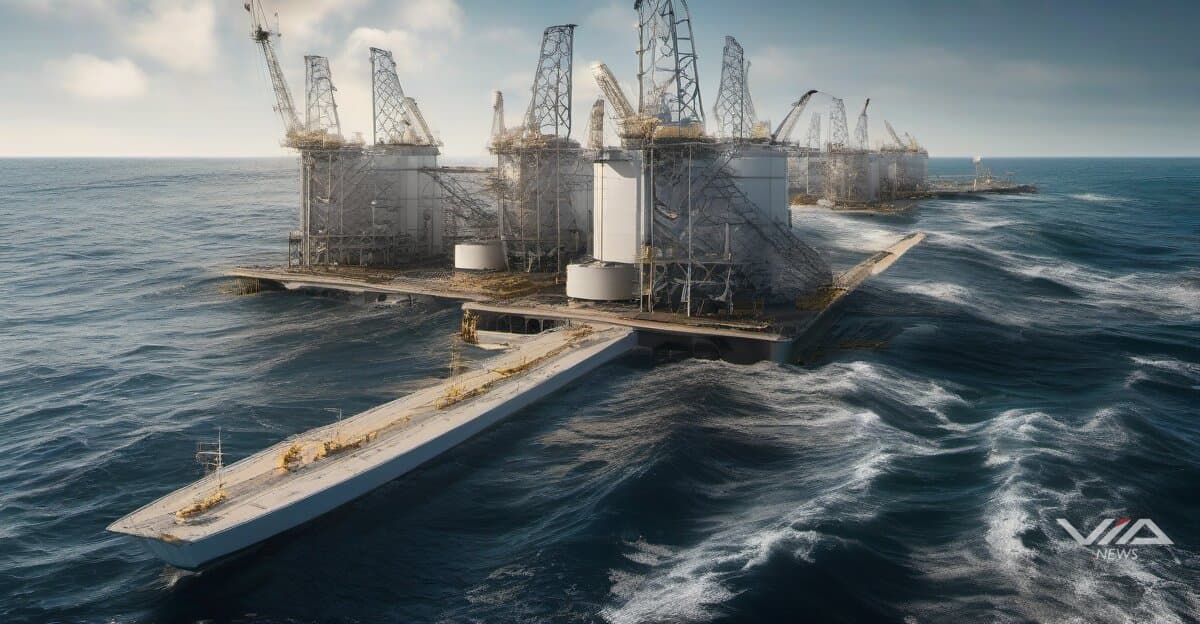
Power delivery constraints are pushing experimental solutions. Aikido plans offshore data centers powered by floating wind turbines, though Daniel King notes marine engineering faces "increased salinity, debris, and various kinds of corrosion and fouling of metal piping" compared to freshwater environments. The approach addresses land-based power grid limitations as AI workloads multiply.
Networking infrastructure is evolving to handle distributed AI workloads. The Ethernet Alliance is developing AI-specific protocols, while Nokia advances AI-RAN (AI Radio Access Network) for 6G. Ronnie Vasishta states physical AI "requires an intelligent network underpinned by AI-RAN so operators can fully harness distributed intelligence across every layer."
Edge computing platforms are attracting investment as enterprises deploy AI agents. Veea Inc. launched TerraFabric, a coordination layer sitting above existing infrastructure without replacing Kubernetes or hardware. The platform includes Lobster Trap security scanning, which operates under one millisecond and introduces no meaningful delay according to company specifications. Veea partnered with NativelyAI to address agent deployment security.
Corporate capital expenditure is shifting toward power and networking upgrades. Data centers require specialized cooling and electrical systems for GPU clusters, while network operators invest in distributed intelligence capabilities. The infrastructure transformation spans three investment vectors: semiconductor manufacturing capacity, regional compute facility construction, and power delivery innovation.
Investment patterns show enterprises prioritizing edge platforms and regional data centers over continued expansion of centralized facilities. The Malaysia GPU center exemplifies capital flowing to Asia-Pacific markets, where AI-native businesses drive demand for local compute resources. Advanced packaging growth reflects semiconductor industry capture of infrastructure buildout spending.