

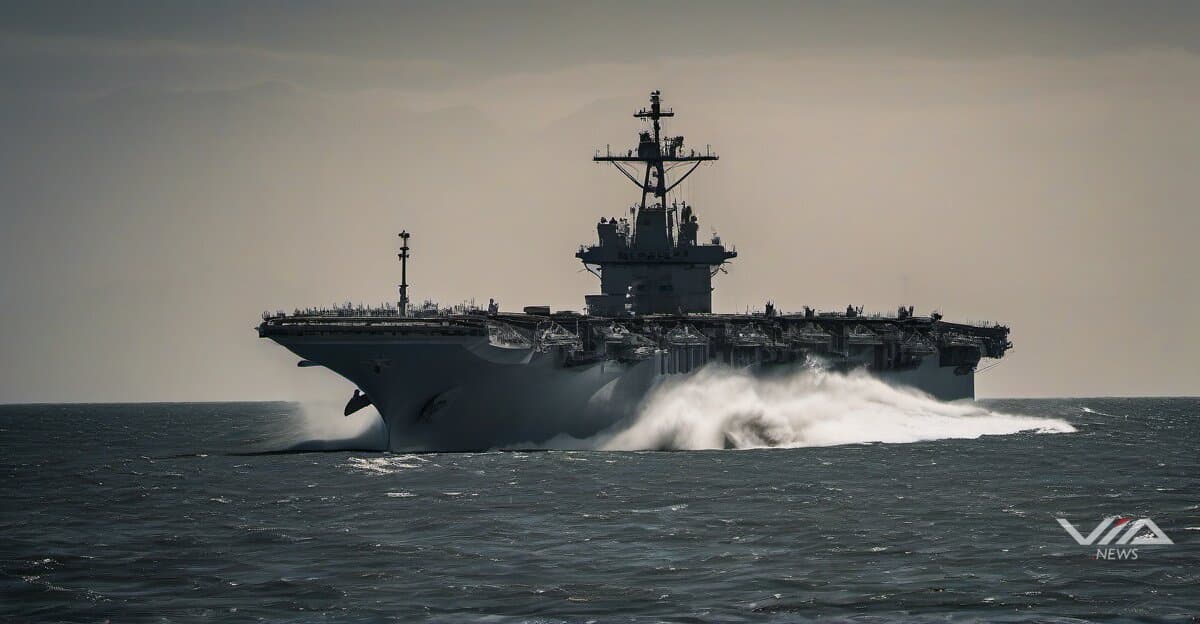
Oil prices surged past $100 per barrel on April 14, 2026, as escalating US-Iran tensions over a Strait of Hormuz blockade triggered flight-to-safety flows into the dollar and traditional haven assets.1 Equity markets wobbled despite the risk-off environment, trimming earlier losses as traders balanced geopolitical risk against corporate fundamentals.1
The dollar firmed on safe-haven demand as currency markets responded to the Iran crisis, with traders positioning for prolonged uncertainty in global oil supply routes.2 The Strait of Hormuz handles roughly one-fifth of global petroleum liquids, making any disruption there a systemic risk to energy markets and inflation expectations.
This geopolitical shock arrived against a backdrop of monetary policy stability. The Bank of Canada held its benchmark rate at 2.25%, maintaining course as Canadian households face mounting financial pressure from economic uncertainty.3 The stable policy stance from both the Bank of Canada and ongoing Federal Reserve oversight discussions provided no monetary offset to the geopolitical volatility.
Goldman Sachs delivered strong quarterly earnings during the crisis, highlighting the divergence between corporate performance and market sentiment. The investment bank's results suggested underlying economic strength, yet failed to prevent the broader risk-off rotation as traders prioritized capital preservation over return-seeking behavior.
Portfolio managers now face the classic crisis-era dilemma: maintain equity exposure justified by earnings, or reduce risk ahead of potential supply shocks. Oil above $100 raises inflation concerns that could force central banks to reconsider their stable policy stance, particularly if energy price increases prove sustained rather than temporary.
The currency market reaction demonstrates how geopolitical risk instantly overrides other market drivers. Despite stable interest rate differentials and solid corporate earnings, the dollar strengthened purely on safe-haven flows—a pattern that typically persists until the underlying crisis shows clear de-escalation.
Canadian consumers face dual pressure from economic uncertainty and potential energy price passthrough, complicating the Bank of Canada's policy calculus. If oil remains elevated, inflation could force a policy response even as household debt burdens argue for continued accommodation.