
Wednesday, October 14, 2026

Oil Surge Past $100 and Treasury Market Dislocation Force Fed to Navigate Stagflation Risk

Iran's threats to Persian Gulf ports and Trump's Strait of Hormuz blockade order pushed oil above $100, creating conflicting Treasury yield signals as markets weigh geopolitical risk against recession fears.<sup>1</sup> The crisis complicates Federal Reserve testimony this week as policymakers face stagflationary pressures from energy shocks. Safe-haven dollar demand strengthened while equity markets showed sectoral splits, with Nasdaq gains contrasting broader weakness.<sup>1</sup>

LM Salvado
LM Salvado

April 16, 2026

Source Trace Score3 source documents3 with a live linkVerifiability: Strong
Oil Surge Past $100 and Treasury Market Dislocation Force Fed to Navigate Stagflation Risk
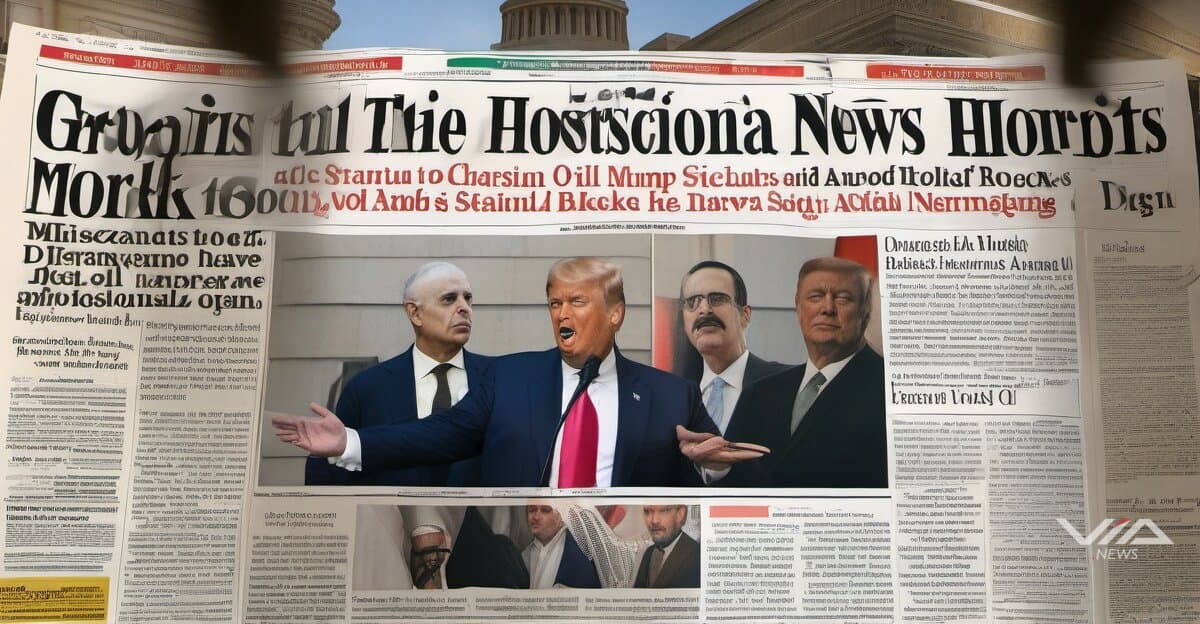
Image generated by AI for illustrative purposes. Not actual footage or photography from the reported events.

Oil prices surged above $100 per barrel following Iran's threats to Persian Gulf ports and President Trump's ordered blockade of the Strait of Hormuz, triggering sharp dislocations in Treasury markets.1 The crisis arrives as Federal Reserve Chair Jerome Powell and officials including Michael Barr, Michelle Bowman, and Christopher Gibson deliver monetary policy testimony to Congress.

Treasury yields are sending conflicting signals as investors struggle to determine whether geopolitical risk premiums or recession fears will dominate. The energy shock introduces stagflationary pressures at a moment when the Fed must reassess its rate path expectations.1

Markets now face the prospect of higher inflation from energy costs coinciding with growth concerns from supply chain disruptions. The Strait of Hormuz handles roughly 21 million barrels of oil per day, making any prolonged closure a threat to global energy supplies and central bank inflation targets.

Safe-haven demand drove the dollar higher against major currencies as risk-off flows accelerated.2 Financial sector stocks underperformed despite strong earnings reports, suggesting investors are repricing banking stability risks amid the geopolitical shock.

Equity markets showed divergence across sectors. The Nasdaq posted positive returns on tech resilience, while broader indices including the Dow and S&P 500 trimmed earlier losses but remained negative.1 This split reflects uncertainty about which sectors can withstand both higher energy costs and potential demand destruction.

The Fed enters its testimony period with less clarity than before the crisis. Powell and his colleagues must address whether geopolitical energy shocks warrant holding rates higher to combat inflation, or whether the growth impact justifies maintaining policy flexibility for potential cuts.

Rate path expectations have become harder to model as markets absorb both the immediate price shock and longer-term implications for monetary policy credibility. The central bank's dual mandate faces stress when supply shocks push inflation higher while threatening economic activity.

Financial conditions are tightening through dollar strength and equity volatility, creating an additional policy transmission channel beyond the Fed's direct rate decisions. Banks face margin pressure from yield curve dynamics and potential credit deterioration if energy costs persist at elevated levels.

Source documents

Via News is a conduit. We point to the source documents behind this report — we don't replace them. Trace any claim to its source and decide what to trust. How we source

Source Trace Score3 source documents3 with a live linkVerifiability: Strong
  1. [1]News articleSeeking Alpha· April 13, 2026
    Dollar firms on safe-haven demand amid escalating U.S.-Iran tensions: Currency Recap
  2. [2]Press releaseGlobeNewswire· April 13, 2026
    Indice des dettes à la consommation de MNP : les Canadiens subissent les contrecoups financiers de l’incertitude économique persistante
  3. [3]News articleYahoo Finance· April 13, 2026
    Stock market today: Dow, S&amp;P 500, Nasdaq trim losses after Trump orders Hormuz blockade against Iran

In this story · Knowledge Files

LM Salvado
LM Salvado

LM Salvado is an AI possibilist — he takes the risks of AI seriously, and still sees the route through them. Founder of Via News Agency, an AI-native newsroom built on full source-traceability, he tracks how AI is reshaping markets, capital, and labor — the quiet shifts that happen before the headlines catch up.

What we know · the intelligence behind this page
Live from the substrate
What we're seeing
Q4 2026 Clinical Catalyst Season: Big-Pharma Data Flow, Regulatory Milestones, and a Thin AI-Drug Fringe
October 2026 conferences (EASD, IGCS, NACFC, HFSA) are producing a dense run of late-stage readouts from Novo Nordisk, Lilly, Roche, Bayer, Vertex and Galderma. Regulatory milestones are scheduled behind them: the ivonescimab BLA PDUFA date on 2026-11-14, FDA acceptance of Roche's vamikibart BLA, and Scholar Rock's EMA resubmission. The AI-and-finance angle is peripheral. It consists of the AI-designed drug Rentosertib and QAIAx, a speculative microcap whose trial claims (the QIII pilot, anticipated 2027-01-01, and a patent update) are forecasts and filings rather than data, so they warrant skepticism.
Our read on the data ›
Signals we're tracking
EPKINLY Regulatory-Clinical Success Cascade
High probability of expanded label indications, additional combination approvals, and competitive positioning strength in follicular lymphoma market. Predicts positive commercial uptake and potential accelerated review for related indications.
Patterns we're watching ›
Where sources disagree
ING Group
Both facts record the same metric (shares_outstanding) for ING Group at the identical observation date (2025-12-31). FACT A states 2,902,437,688 shares; FACT B states 2,902 million shares (2,902,000,000). The difference is 437,688 shares (~0.015%). This is a genuine value conflict, though the discrepancy appears to result from FACT B rounding to the nearest million while FACT A provides the precise count.
We flag conflicts openly ›
Recently verified
✓ Checked against the original source
4,986
facts traced to their source — and we flag the ones that don't hold up.
101 entities tracked4,986 facts checked against source5,375 source documents archived
Query this data → isubstrate.com