
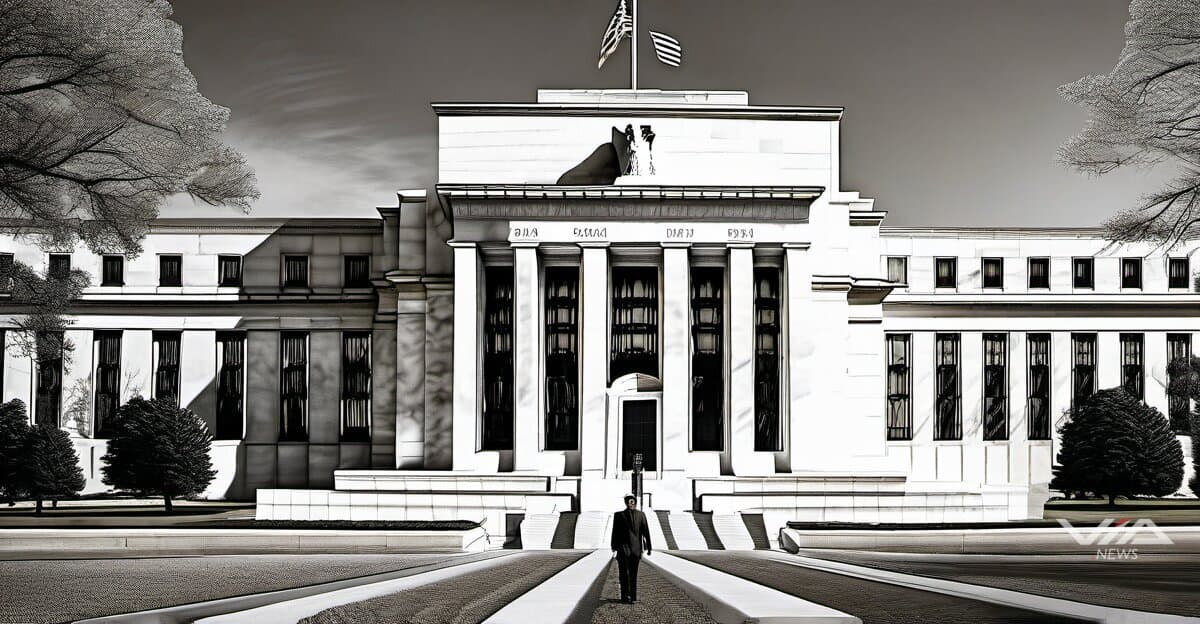
The Federal Reserve has shifted into a deliberate holding pattern, with a chorus of policymakers signaling that the aggressive easing cycle that began in late 2024 has effectively run its course — at least for now.
Speaking publicly in recent weeks, Chair Jerome Powell made clear that the central bank is in no rush to move. "We're well-positioned to see how the economy evolves," Powell said, adding that rate hikes are nowhere on the horizon: "I don't think that a rate hike is anybody's base case at this point. I'm not hearing that."
That message has been echoed across the Federal Open Market Committee. Governors Philip Jefferson and Jeff Schmid, along with Chicago Fed President Austan Goolsbee, have each reinforced the view that the federal funds rate is at or near its neutral level — the theoretical rate that neither stimulates nor restricts economic activity. With that benchmark in sight, officials argue the calculus for additional cuts has changed fundamentally.
Markets Re-Price Fed Path
Investors have taken note. Fed funds futures now price in just a 51% probability of a single 25-basis-point cut by June 2026 — a dramatic cooling from earlier in the easing cycle when multiple cuts were widely anticipated. The repricing reflects a growing consensus on trading desks that the Fed's next move, whenever it comes, will be measured and conditional rather than a continuation of the aggressive pace seen in 2024.
The shift carries real consequences for borrowers and markets alike. Mortgage rates, corporate borrowing costs, and valuations in rate-sensitive sectors such as real estate and utilities are all calibrated against expectations for where the Fed is headed. A prolonged pause keeps financial conditions tighter for longer, even if the headline rate remains unchanged.
Balancing Inflation Caution Against Economic Resilience
The Fed's pause is rooted in a nuanced economic picture. On one hand, inflation has retreated significantly from its 2022 peaks, giving policymakers room to ease. On the other hand, the economy has proved more durable than many expected, with consumer spending holding up and a wave of AI-related capital expenditure driving investment. That resilience reduces the urgency for additional stimulus.
Goolsbee, one of the more dovish voices on the committee, acknowledged the complexity, suggesting that waiting for more data before acting would have carried limited risk. "Waiting to take this matter up in the new year would not have entailed much additional risk and would have come with the added benefit of updated economic data," he noted — a signal that even those inclined toward easier policy recognize the value of patience in the current environment.
Political Pressure and Fed Independence
Complicating the picture is an emerging political dimension. Powell has publicly defended the Fed's independence in recent appearances, a pointed response to growing pressure from political circles for lower rates. Former Fed official Dennis Lockhart, assessing the likely approach of potential future Fed leadership, noted that any successor "will follow the pattern that the FOMC has shown for years, and that is let the data tell you what's the right policy."
For investors and businesses, the message from the Fed is unambiguous: the era of rapid rate adjustments is on hold. Policymakers want to see sustained evidence — whether on inflation, employment, or growth — before pulling any levers. In an economy still navigating geopolitical uncertainty, trade policy shifts, and the uneven impact of technological disruption, that patience may prove to be the Fed's most powerful tool.