
Wednesday, October 14, 2026

Suniva CEO Faces Catastrophic Risk as Solar Manufacturing Hinges on Tariffs and IRA Credits

U.S. solar manufacturing economics rest almost entirely on Section 201/301 tariffs and IRA manufacturing tax credits, according to a June 2026 risk assessment of Suniva CEO Tony Etnyre. Any policy reversal or rollback under a new administration would collapse U.S.-made solar cell cost competitiveness against imports. Regulatory risk is rated catastrophic in severity.

LM Salvado
LM Salvado

June 15, 2026

Suniva CEO Faces Catastrophic Risk as Solar Manufacturing Hinges on Tariffs and IRA Credits
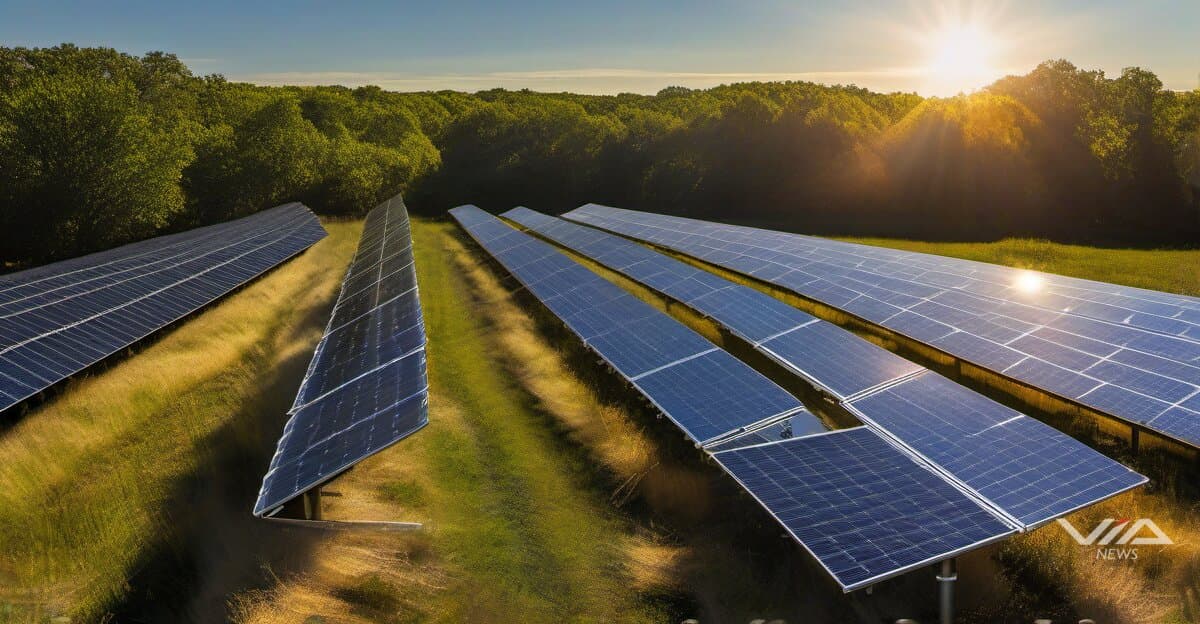
Image generated by AI for illustrative purposes. Not actual footage or photography from the reported events.

U.S. domestic solar manufacturing is one policy shift away from unraveling.1 A June 2026 risk assessment of Tony Etnyre, Chief Executive Officer of Suniva, identifies a catastrophic regulatory threat: the entire economics of domestic solar production depend on Section 201/301 tariffs and IRA manufacturing tax credits.1

Remove either pillar, and U.S.-made solar cells cannot compete on cost with imported alternatives.1 That dependency is the central financial vulnerability facing Suniva and the broader domestic solar manufacturing sector.

The IRA's manufacturing production credits have been a lifeline for U.S. solar cell producers, offsetting the cost gap that would otherwise make domestic production economically unviable.1 Section 201 and 301 tariffs have simultaneously shielded American factories from lower-cost foreign competition. Together, these two policy instruments function less as a competitive advantage and more as a survival mechanism.

The risk carries medium likelihood but catastrophic severity.1 A new administration reconsidering trade policy or cutting IRA subsidies in budget negotiations would not merely reduce margins — it would structurally undermine the business case for domestic solar cell manufacturing.

For investors and lenders with exposure to U.S. solar manufacturing assets, this is a binary risk profile. The sector does not have a fallback cost structure that allows it to absorb a significant tariff reduction or subsidy cut. There is no gradual adjustment — there is viability or collapse.

Suniva, under Etnyre's leadership, operates in a market where policy continuity is not a growth factor but a precondition for operation.1 That makes executive decision-making unusually constrained: capital allocation, capacity planning, and long-term contracts all carry policy-expiration risk embedded in their assumptions.

The broader implication for the manufacturing finance sector is a reminder that policy-dependent industries carry a form of systemic risk that standard credit and equity models often underweight. When a company's cost competitiveness is a legislative artifact rather than an operational achievement, the risk profile belongs in a different analytical category.

About this analysis

This is a Via News analysis. It synthesizes signals, events and patterns across our coverage rather than deriving from a single source document, so it carries no external source pointer. Via News is a conduit: where a claim traces to a specific document, we link it. How we source

LM Salvado
LM Salvado

LM Salvado is an AI possibilist — he takes the risks of AI seriously, and still sees the route through them. Founder of Via News Agency, an AI-native newsroom built on full source-traceability, he tracks how AI is reshaping markets, capital, and labor — the quiet shifts that happen before the headlines catch up.

What we know · the intelligence behind this page
Live from the substrate
What we're seeing
Q4 2026 Clinical Catalyst Season: Big-Pharma Data Flow, Regulatory Milestones, and a Thin AI-Drug Fringe
October 2026 conferences (EASD, IGCS, NACFC, HFSA) are producing a dense run of late-stage readouts from Novo Nordisk, Lilly, Roche, Bayer, Vertex and Galderma. Regulatory milestones are scheduled behind them: the ivonescimab BLA PDUFA date on 2026-11-14, FDA acceptance of Roche's vamikibart BLA, and Scholar Rock's EMA resubmission. The AI-and-finance angle is peripheral. It consists of the AI-designed drug Rentosertib and QAIAx, a speculative microcap whose trial claims (the QIII pilot, anticipated 2027-01-01, and a patent update) are forecasts and filings rather than data, so they warrant skepticism.
Our read on the data ›
Signals we're tracking
EPKINLY Regulatory-Clinical Success Cascade
High probability of expanded label indications, additional combination approvals, and competitive positioning strength in follicular lymphoma market. Predicts positive commercial uptake and potential accelerated review for related indications.
Patterns we're watching ›
Where sources disagree
ING Group
Both facts record the same metric (shares_outstanding) for ING Group at the identical observation date (2025-12-31). FACT A states 2,902,437,688 shares; FACT B states 2,902 million shares (2,902,000,000). The difference is 437,688 shares (~0.015%). This is a genuine value conflict, though the discrepancy appears to result from FACT B rounding to the nearest million while FACT A provides the precise count.
We flag conflicts openly ›
Recently verified
✓ Checked against the original source
4,986
facts traced to their source — and we flag the ones that don't hold up.
101 entities tracked4,986 facts checked against source5,375 source documents archived
Query this data → isubstrate.com