
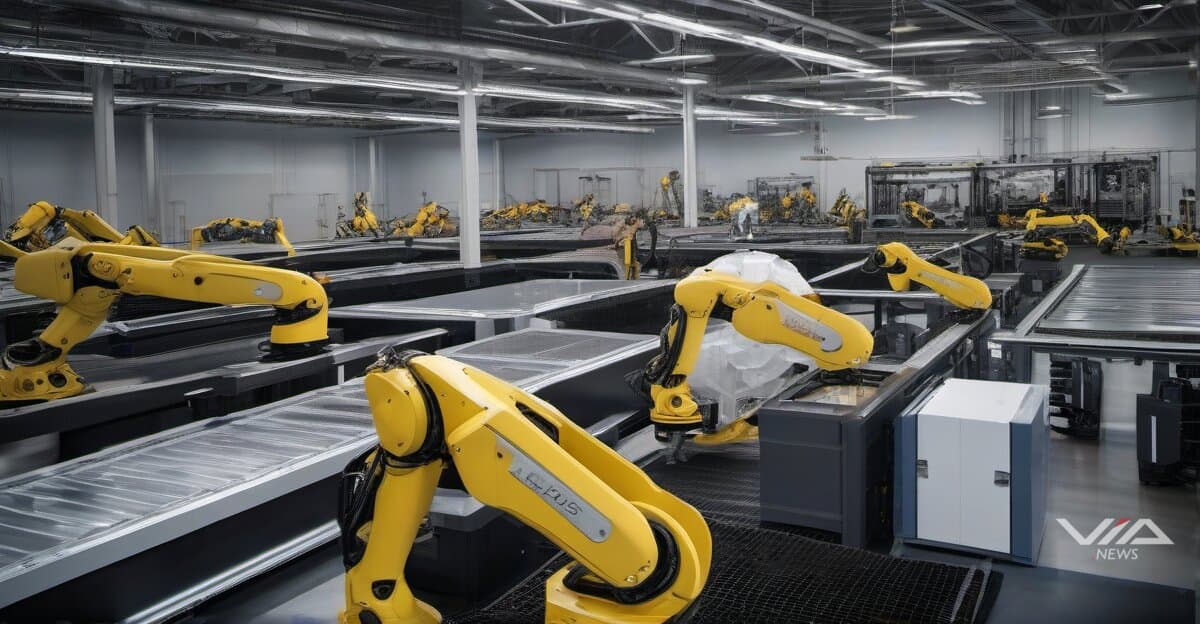
AI-powered warehouse automation systems have crossed the 98% accuracy threshold, triggering corporate capital expenditure decisions that move robotics from experimental budgets to core operational infrastructure. Companies report order-picking error rates below 2%, matching or exceeding human performance while operating continuously.
Autonomous vehicle manufacturers have locked production schedules for 2026-2027 commercial launches. These timelines reflect resolved supply chain constraints and completed safety validation protocols, not speculative targets. Manufacturing capacity is being allocated to initial fleet deployments in controlled logistics environments.
Defense contractors and industrial manufacturers are formalizing partnerships to deploy physical AI systems. These collaborations focus on integrating machine learning with robotic manipulation in environments requiring adaptability—assembly lines with variable components, maintenance operations in hazardous conditions, and material handling with unpredictable geometries.
Regulatory agencies have approved expanded use cases for assistive robotics in healthcare and commercial settings. New classifications allow autonomous mobile robots in hospital corridors, elder care facilities, and multi-tenant warehouses without continuous human supervision. This regulatory shift removes deployment barriers that previously limited return-on-investment calculations.
AI-RAN 5G infrastructure is enabling real-time coordination between distributed robotic systems. Warehouses report managing 50+ autonomous units simultaneously with sub-100ms latency, allowing dynamic task reallocation based on priority changes. This networked approach reduces idle time and eliminates bottlenecks that plagued earlier single-unit automation.
The capital expenditure profile is shifting. Early deployments required 3-5 year payback periods; current systems justify 18-24 month timelines due to lower unit costs and higher utilization rates. Manufacturing facilities are budgeting robotics as operational expense rather than experimental R&D, indicating confidence in performance metrics and maintenance predictability.
Corporate buyers are consolidating vendor relationships rather than fragmenting across niche providers. Preference is shifting toward integrated platforms that manage navigation, manipulation, and fleet coordination through unified interfaces. This consolidation pattern suggests the technology has matured past the innovation phase into operational standardization.
The convergence of proven AI accuracy, manufacturing capacity for autonomous systems, and infrastructure capable of supporting coordinated robotic fleets is compressing deployment timelines across logistics, manufacturing, and service sectors.