
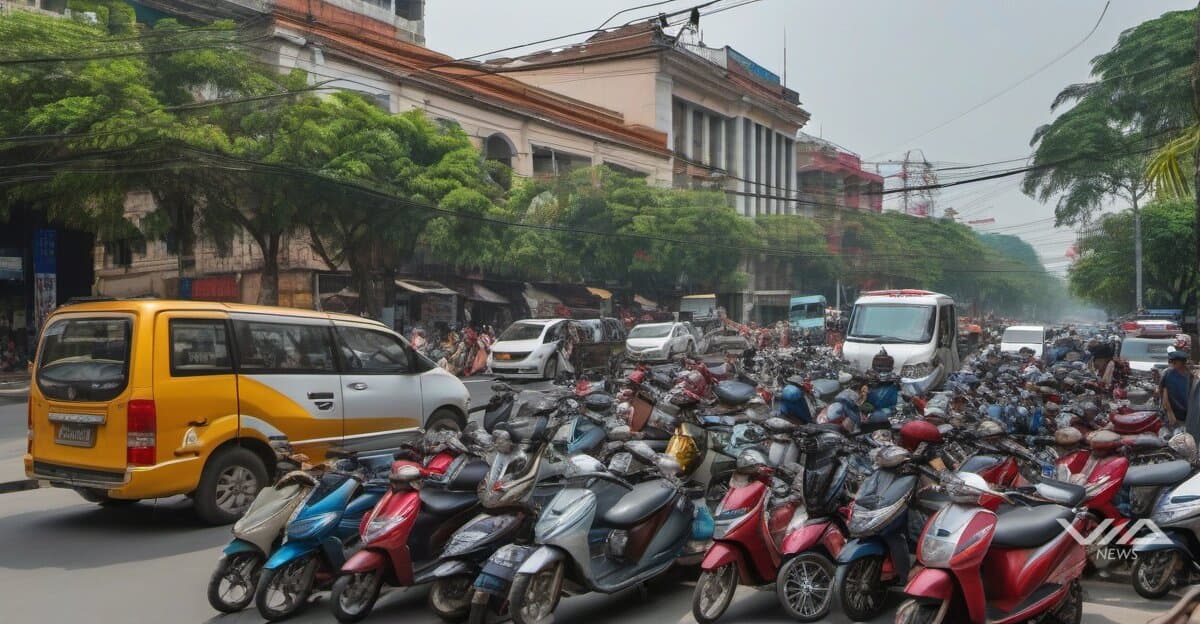
Hanoi will ban all fossil fuel motorbikes from its city center starting January 1, 2030, a regulatory shift affecting 5+ million vehicles in Vietnam's capital region. The policy targets the metropolitan core where 80% of commuters rely on two-wheel transport.
Vietnam's motorbike market was valued at $8.2 billion in 2024, with Hanoi representing roughly 20% of national sales. Honda and Yamaha control 75% of current market share through gasoline models priced $800-$1,500. Electric alternatives currently cost $1,200-$2,800, creating a $400-$1,300 price gap the industry must close before 2030.
Battery swapping networks emerge as the critical infrastructure play. Gogoro, Taiwan's electric scooter maker, operates 12,000 battery swap stations across Asia but has zero presence in Vietnam. The Hanoi metro area would require an estimated 800-1,200 swap stations to match gasoline refueling convenience, representing $120-$180 million in infrastructure investment.
Local manufacturers VinFast and Dat Bike gained 8% electric motorbike market share in 2025, up from 2% in 2023. VinFast's Klara model sells for $1,400 with a 75km range. Dat Bike's Weaver model costs $2,100 for 150km range. Both companies raised Series B rounds in 2025—VinFast $200M, Dat Bike $35M—targeting production scale-up before the ban.
Component suppliers face margin pressure as battery costs determine final pricing. Lithium-ion packs represent 40-50% of electric motorbike costs versus 15% for engines in gas bikes. CATL and Samsung SDI already supply Vietnam's electric car sector but have not announced two-wheel battery partnerships.
Investment opportunities cluster around three segments: manufacturers with sub-$1,000 electric models, battery swap infrastructure operators, and lithium iron phosphate battery makers offering cheaper alternatives to lithium-ion. Indonesia and Thailand watch Hanoi's execution closely—both nations have 2035 targets for phasing out gasoline motorbikes in major cities.
The ban's success depends on subsidy programs. Vietnam's government has not announced trade-in incentives, which Thailand used to accelerate 400,000 electric motorbike sales in 2024-2025.