
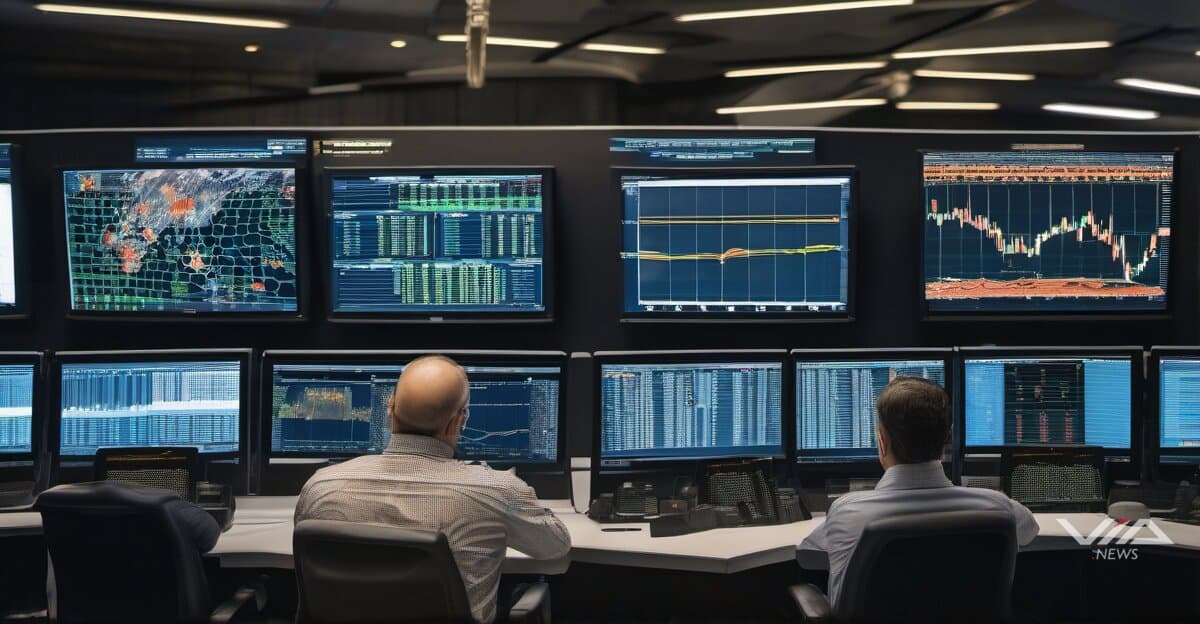
Market makers are racing to deploy advanced AI systems as digital-asset and equity markets shift toward automated infrastructure. Flow Traders, Tradeweb, and Virtu Financial are channeling resources into machine learning platforms that process multi-route analytics and adapt to liquidity conditions in real time.
Galidix expanded its adaptive AI layer in December 2025, responding to what the company describes as volatility cycles evolving at unprecedented speeds. TPK Trading unveiled an enhanced AI performance layer the same month, targeting execution precision in digital markets.
The infrastructure buildout centers on three capabilities: pattern-recognition algorithms that identify liquidity gaps and trend reversals, predictive modeling modules processing historical and current datasets, and low-latency routing systems that execute trades across fragmented markets.
Quantum AI launched a multi-asset platform in 2025 with a minimum $250 deposit, covering cryptocurrencies, forex, equities, commodities, and indices. The system runs continuous monitoring across assets with automated reaction cycles that process market shifts and risk-threshold adjustments without manual intervention.
TPK Trading argues that platforms synthesizing large-scale data while maintaining coherent performance will dominate future digital-asset trading. The competitive threshold now includes real-time data harmonization—aggregating pricing data, volume activity, market depth, and correlation metrics across exchanges.
Traditional market makers face pressure from specialized entrants building purpose-built AI stacks. While established firms leverage existing client relationships and capital reserves, newcomers compete on execution speed and volatility adaptation. The infrastructure race spans both proprietary trading desks and platforms serving institutional clients.
The automation wave carries execution risk. Systems that misread liquidity signals or fail during volatility spikes can amplify losses. Firms are layering anomaly-detection protocols and risk-optimization modules to prevent cascading failures.
Multi-factor authentication, session monitoring, and behavioral-anomaly detection now form baseline security requirements as platforms process sensitive trading data and client positions. Advanced encryption protects data at rest and in transit across distributed server networks.
The infrastructure arms race reflects market structure changes: fragmented liquidity across venues, millisecond-level price discrepancies, and 24/7 digital-asset trading cycles that human traders cannot continuously monitor. Firms that automate these processes gain systematic advantages over manual operations.