
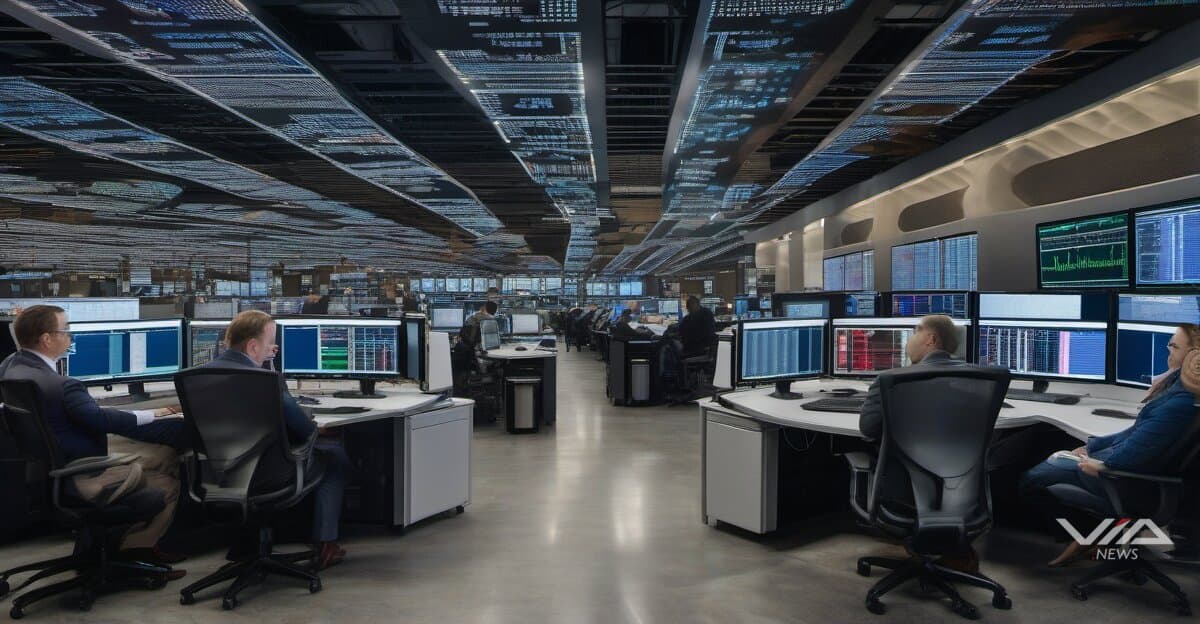
Major algorithmic trading platforms are scaling AI infrastructure as market volumes reach record levels. Flow Traders, TPK Trading, and Galidix invested in adaptive AI technologies through late 2025, while Tradeweb and Virtu Financial reported record Q4 performance.
TPK Trading upgraded its AI performance layer in December 2025, targeting digital asset execution precision. The company states platforms that synthesize large-scale data and adapt to volatility will dominate future digital-asset trading. Galidix expanded its adaptive AI layer the same month, citing automated infrastructures evolving at unprecedented speeds.
The shift replaces static trading models with dynamic systems that adjust execution in real time. Digital-asset markets face faster structural shifts and volatility cycles that manual systems cannot track. Liquidity conditions now change at speeds requiring automated response.
Quantum AI launched its multi-asset platform in 2025 with a $250 minimum deposit and no platform fees. The New York-based system processes pattern recognition, predictive modeling, and anomaly detection across cryptocurrencies, forex, equities, commodities, and indices. Its AI engine integrates market analytics, portfolio automation, and risk-optimized execution through regulated broker partnerships.
The technology layer includes low-latency routing, 24/7 monitoring, and automated reaction cycles that process market shifts and risk-threshold adjustments continuously. Multi-factor authentication and behavioral-anomaly detection secure the infrastructure.
Trading firms now prioritize platforms that maintain coherent performance during volatility spikes. The infrastructure investments reflect market fragmentation across digital assets, where execution quality depends on synthesizing data from multiple venues simultaneously. Firms unable to adapt face execution slippage as liquidity disperses.
The Q4 2025 performance records at Tradeweb and Virtu Financial validate the adaptive infrastructure approach. Both firms handle multi-route execution across fragmented markets, demonstrating how AI layers improve fill rates during volatile periods.
Algorithmic trading infrastructure now functions as critical financial plumbing. The firms scaling AI capabilities position themselves as essential intermediaries in markets where speed and precision determine execution quality. Traditional static systems cannot compete in environments where market conditions shift multiple times per second.