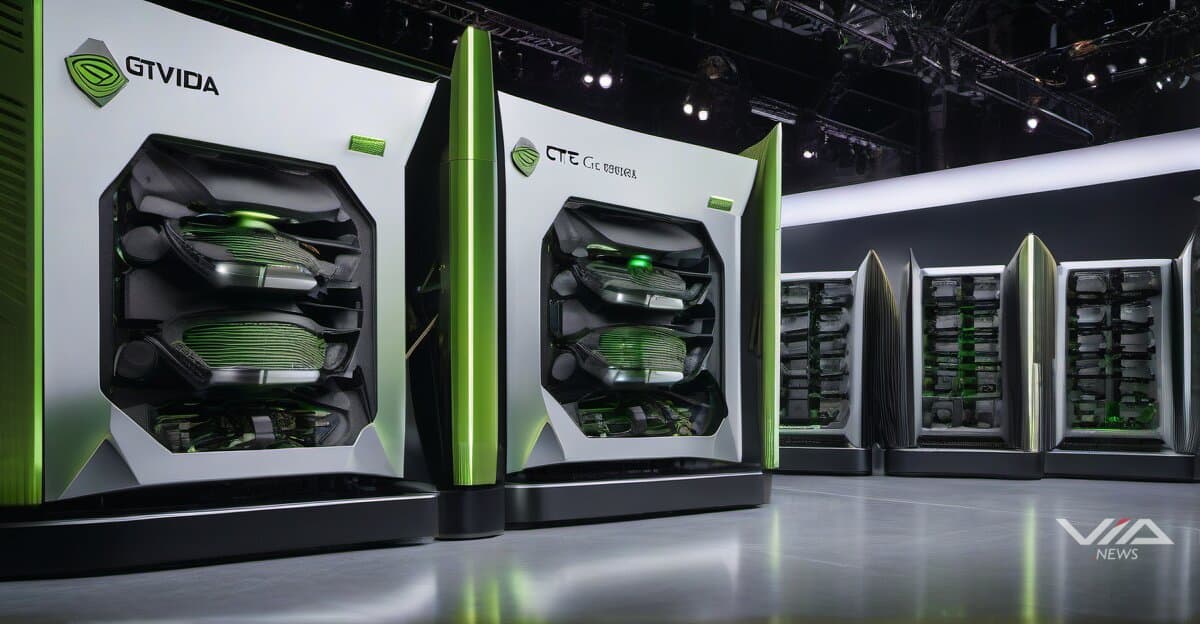
NVIDIA announced over 80 strategic partnerships at GTC 2026 on March 16, positioning itself as the central orchestrator of AI infrastructure rather than just a chip supplier.1 The company unveiled partnerships spanning cloud providers, industrial software giants, robotics manufacturers, and inference providers.
The partnership strategy accompanies a comprehensive product stack. NVIDIA launched Vera Rubin servers and Grace Blackwell processors for AI computing infrastructure. For robotics, the company introduced GR00T N2 foundation models and a new Agent Toolkit for developers building autonomous systems.1
This approach represents a platform shift. Instead of selling standalone GPUs, NVIDIA now offers end-to-end infrastructure from hardware to software frameworks. The 80+ partnerships create distribution channels across industries including manufacturing, logistics, and enterprise software.
The robotics foundation model targets physical AI applications. GR00T N2 enables companies to build autonomous systems without training models from scratch. The Agent Toolkit provides pre-built components for developers, lowering barriers to deployment.
Cloud partnerships expand NVIDIA's enterprise reach beyond on-premise deployments. Industrial software collaborations integrate NVIDIA's AI capabilities into existing enterprise workflows. This ecosystem strategy creates switching costs as customers build on NVIDIA's platform.
The timing aligns with rising enterprise AI adoption. Companies need integrated solutions rather than assembling components themselves. NVIDIA's partnerships address this by embedding its technology across the software stack.Partners gain access to NVIDIA's hardware roadmap and optimization tools. NVIDIA gains distribution into enterprise accounts and insights into customer requirements.
The robotics focus extends NVIDIA's addressable market beyond data centers. Physical AI applications in warehouses, factories, and logistics represent new revenue streams. Foundation models enable faster deployment cycles for robotics companies.
For enterprises, the partnerships reduce integration risk. Validated solutions from established software vendors lower deployment barriers. The comprehensive toolkit accelerates time-to-production for AI initiatives.