
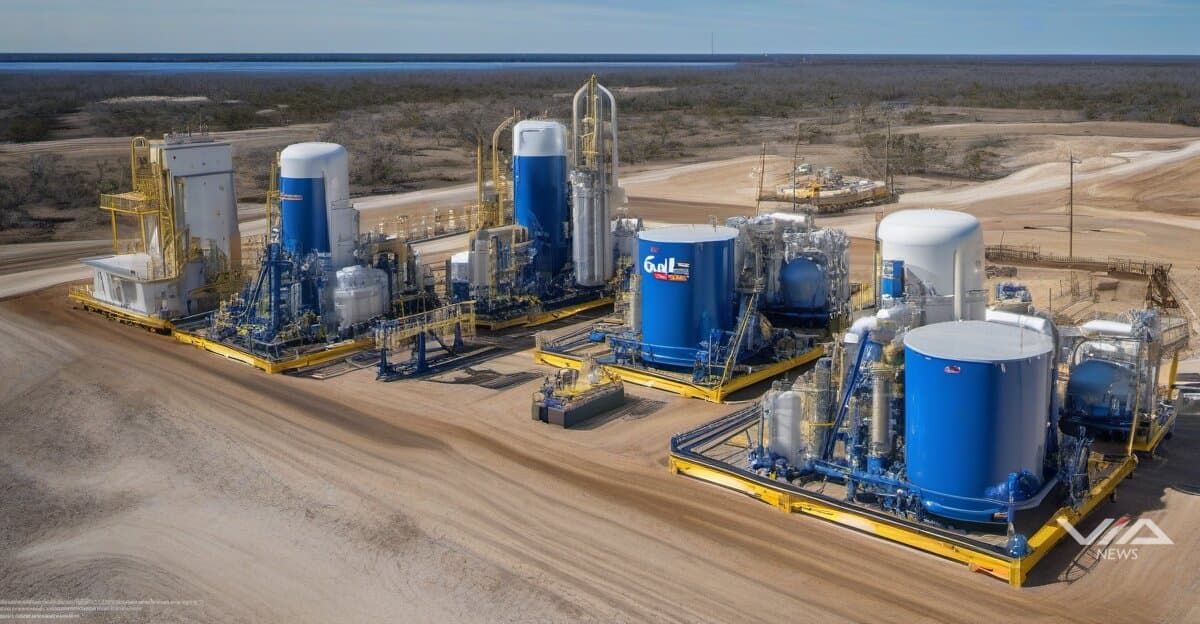
Marathon Petroleum will purchase 100% of output from two Gulf Coast fractionators, each processing 150,000 barrels per day, when they come online in 2028 and 2029. The offtake agreements secure 300,000 bpd of combined NGL fractionation capacity for the refiner.
The facilities will process natural gas liquids into component products including ethane, propane, and butane. Marathon's full-output purchase commitment likely involves take-or-pay contract structures, transferring volume risk to the buyer while guaranteeing revenue for the facility operators.
At current NGL processing spreads of $4-6 per barrel, the combined 300,000 bpd capacity implies $440M to $660M in annual processing costs for Marathon. Over a typical 15-year contract term, total commitment value could reach $6.6B to $9.9B before accounting for price escalations.
The timing aligns with Permian Basin production forecasts. The Energy Information Administration projects U.S. natural gas production will grow 12% through 2028, with associated NGL volumes rising proportionally. Marathon is pre-positioning for this supply increase rather than competing for spot capacity.
Marathon operates six refineries processing 2.9 million bpd total crude. The company has historically integrated backward into feedstock supply chains. These fractionator commitments extend that strategy into NGL derivatives used in petrochemical production and refinery blending operations.
The Gulf Coast hosts 70% of U.S. fractionation capacity due to proximity to petrochemical complexes and export terminals. New capacity additions have lagged production growth since 2020, creating bottlenecks that these 2028-2029 facilities will address.
For project developers, Marathon's purchase commitment de-risks project financing by guaranteeing cash flows before construction. This contracting model has become standard for midstream infrastructure where single anchor tenants provide credit support for multi-hundred-million-dollar facilities.
Marathon's equity commitment signals confidence in sustained NGL production growth and stable processing economics through the end of the decade. The contracts lock in feedstock access while competitors face potential capacity constraints if production forecasts materialize.