
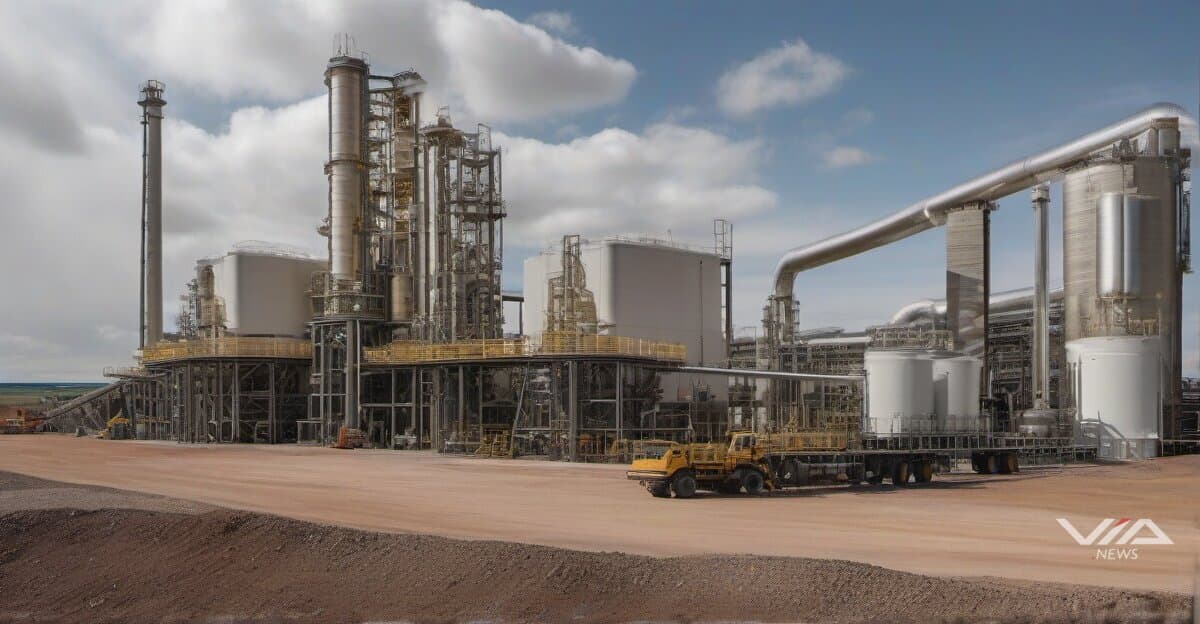
Canadian Natural Resources Limited (TSX: CNQ, NYSE: CNQ) has earmarked 2027 as the production start date for a new Steam-Assisted Gravity Drainage (SAGD) pad at its Kirby thermal in situ facility in Alberta — a capital milestone embedded within a broader $6.425 billion budget for 2026 that reveals as much about the company's financial discipline as it does about its operational ambitions.
The Kirby SAGD pad is one component of an active thermal in situ program that also includes three Cyclic Steam Stimulation (CSS) pads at Primrose, with the first of those scheduled for a Q3 2026 production start. Together, these projects reflect CNQ's allocation of $2.98 billion toward its Thermal and Oil Sands Mining & Upgrading segment — nearly half of the company's total operating capital budget of $6.3 billion.
Capital Structure Under the Microscope
The expansion comes as CNQ carries significant leverage. As of September 30, 2025, the company reported long-term debt of $17.268 billion against just $113 million in cash, placing net debt at $17.155 billion. That figure sits above the $15 billion threshold in CNQ's tiered free cash flow allocation framework — a policy introduced following the announcement of the Chevron asset acquisition in October 2024.
Under the current policy, with net debt exceeding $15 billion, only 60% of free cash flow is directed toward shareholder returns, with 40% reserved for balance sheet reduction. The Kirby production milestone in 2027 matters here: incremental thermal output contributes directly to adjusted funds flow, accelerating the path toward the $12–15 billion net debt band, where shareholder returns rise to 75%, and ultimately to the sub-$12 billion tier, where 100% of free cash flow returns to shareholders.
In Q3 2025, CNQ generated adjusted funds flow of $3.92 billion, paid $1.228 billion in dividends, and recorded free cash flow of $379 million after $2.124 billion in net capital expenditures and $189 million in abandonment costs. The debt reduction imperative is clear, and each new production pad that comes online incrementally strengthens the cash generation engine.
Thermal In Situ as a Financial Engine
SAGD operations, once past the capital-intensive ramp-up phase, are known for predictable, long-plateau production profiles — a quality that appeals to investors seeking visibility on future cash flows. For CNQ, which targets total production of 1,590–1,650 MBOE/d in 2026, the 2027 Kirby pad represents a staged addition to a production base already growing at approximately 3% year-over-year.
The company's liquids production — projected at 1,177–1,220 Mbbl/d for 2026, representing 5% growth over 2025 — is the primary driver of revenue quality, given the premium commanded by synthetic crude oil (SCO) and light oil versus heavier blends. Thermal in situ heavy oil accounts for roughly 25% of the production mix, making operational efficiency at facilities like Kirby a direct lever on corporate margins.
CNQ has also allocated $175 million in Front-End Engineering and Design (FEED) capital for medium- and long-term projects, suggesting the pipeline beyond Kirby remains active. The company's $125 million carbon capture capital allocation also signals awareness of the regulatory environment, particularly as Canada's Competition Act amendments and potential emissions caps introduce compliance costs that could affect project economics.
Investor Takeaway
For equity investors and fixed-income analysts, the Kirby SAGD pad is not merely an operational data point — it is a signal of capital commitment in a sector where project timelines and cost discipline determine long-term value creation. CNQ's structured approach to debt reduction, combined with staged thermal production additions, positions the company to progressively unlock higher shareholder return ratios as its balance sheet improves through 2026 and 2027.
CFO Victor Darel's assertion that CNQ's "resilience is a result of our strong balance sheet and disciplined and consistent capital allocation strategy" will be tested against rising capital expenditures and an uncertain tariff and commodity price environment — but the Kirby milestone remains a concrete marker of progress toward that stated discipline.