
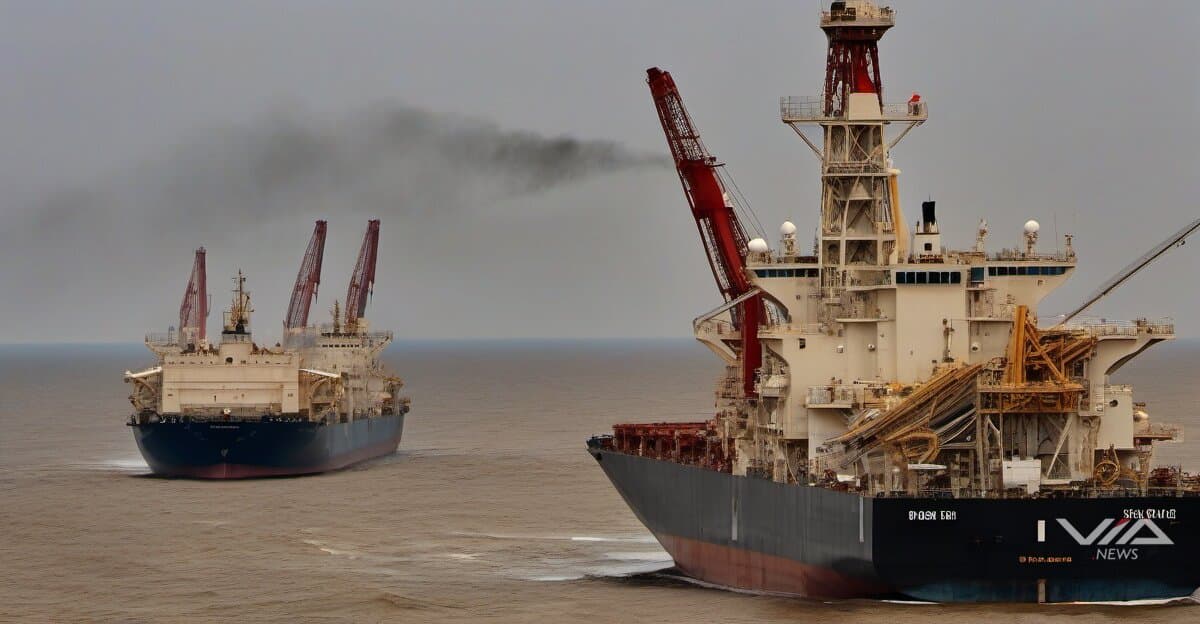
The ongoing Middle East conflict has removed approximately 20 million barrels per day from global markets through a blockade of the Strait of Hormuz, according to MacroEdge Research. The supply shock is forcing central banks to abandon near-term rate cut plans.
The Bank of England held interest rates at 3.75% this month, citing inflationary pressures from energy markets. UK mortgage lenders responded immediately. David Hollingworth, lending specialist, confirms "the first big name lender moves" are now filtering through to consumers, with rates climbing despite the hold.
The Hormuz chokepoint typically handles 21 million barrels daily—roughly 21% of global petroleum consumption. The current disruption matches worst-case scenarios that energy analysts have modeled for decades. Brent crude prices have surged in response, feeding directly into transportation and heating costs across developed economies.
Atlanta Federal Reserve President Raphael Bostic projects inflation pressures will persist through "mid to late 2026" at minimum. His timeline aligns with fixed-rate mortgage products now being priced by UK lenders, who are building in 18-24 months of elevated base rates.
The policy bind is acute: households facing mortgage refinancing in 2026-2027 will pay hundreds more monthly even if central banks hold current levels. A typical £300,000 mortgage could see payments rise £150-250 per month as fixed terms expire and borrowers move to current market rates.
Market expectations have shifted dramatically. Three months ago, traders priced in UK rate cuts beginning mid-2026. Current futures markets show minimal probability of cuts before Q4 2026, matching Bostic's Federal Reserve outlook.
The energy-inflation-rates connection creates a feedback loop for investors. Higher oil prices increase business costs, supporting wage demands that entrench inflation. Central banks must then maintain restrictive policy longer, pressuring equity valuations and corporate borrowing costs.
Financial markets are now monitoring three key indicators: week-to-week crude price movements, monthly UK CPI data for energy component changes, and central bank meeting minutes for explicit references to geopolitical energy risks. The correlation between these factors will determine whether Bostic's late-2026 timeline proves accurate or optimistic.