
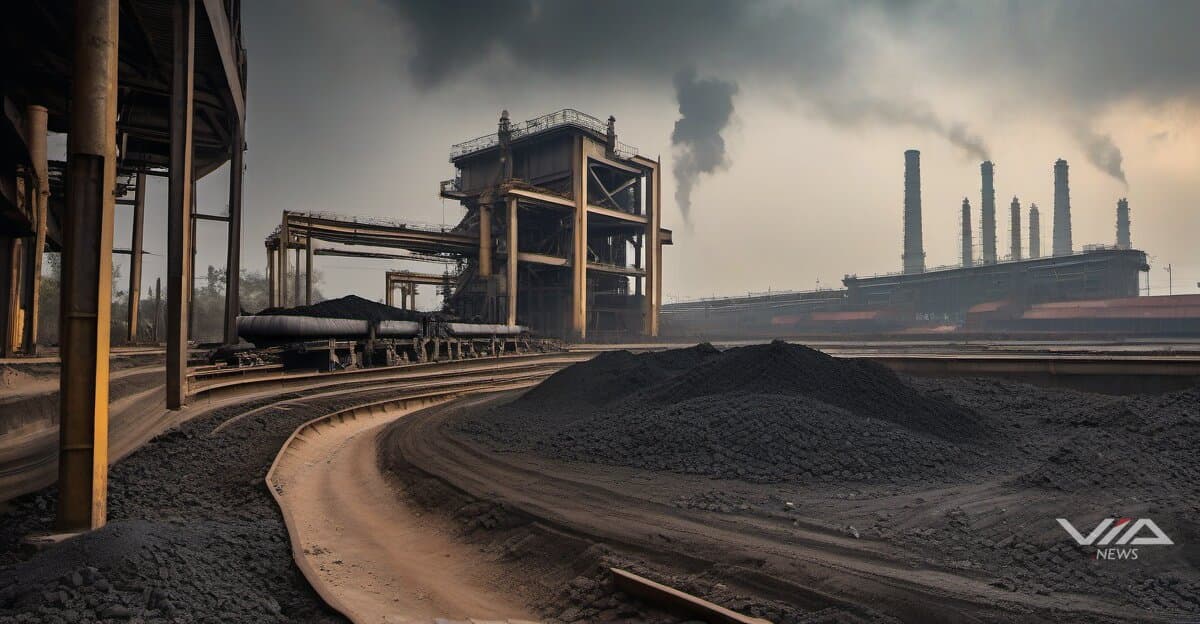
India's Ministry of Coal is advancing plans for 100 new coal facilities as renewable energy costs have dropped 90% since 2010, creating potential stranded asset exposure above $80 billion for investors and state-backed banks.
Coal plants require 25-30 year operational periods to recoup construction costs. Solar and wind power now cost $0.02-0.03 per kilowatt-hour in India, undercutting coal's $0.05-0.07 range. This price gap widens annually as renewable technology improves while coal faces rising carbon compliance costs.
The capital allocation risk centers on asset obsolescence before debt maturity. Indian coal projects typically carry 70-80% debt financing from public sector banks. If plants become economically unviable within 15 years due to renewable competition, lenders face significant write-downs on what are currently considered infrastructure-grade assets.
State electricity boards already struggle with coal plant utilization rates below 60%. Adding 100 facilities increases fixed cost burdens while renewable capacity expands faster. India added 13 GW of solar in 2025 versus 2 GW of coal, yet coal receives disproportionate long-term capital commitments.
Corporate power purchase agreements increasingly favor renewables. Companies including Tata Steel and Reliance Industries have committed to 100% renewable energy by 2035. This demand shift leaves coal plants competing for a shrinking customer base willing to pay premium rates for carbon-intensive power.
International investors face reputational and regulatory pressure. European banks have withdrawn $12 billion in coal financing commitments to Indian projects since 2023. Domestic financing fills the gap, concentrating risk within India's banking system rather than distributing it globally.
Carbon border adjustment mechanisms in the EU and proposed US tariffs create additional pressure. Indian exporters using coal-heavy power face cost penalties, incentivizing renewable adoption and further eroding coal plant economics.
The Ministry's Atma Nirbhar self-reliance strategy prioritizes domestic coal to reduce import dependency. This policy goal conflicts with financial optimization as it commits capital to depreciating assets while competitors in Vietnam and Indonesia pivot toward cheaper renewable baseload power.
Asset managers holding Indian infrastructure debt need stress testing for coal exposure. Plants commissioned in 2026-2028 may face write-down pressure by 2035 as renewable costs continue falling 10-15% annually.