
Defense Capital Cycle Enters a New Phase
The United States defense industrial base is undergoing one of its most significant capital investment cycles in decades. Underpinned by a landmark $839 billion defense spending authorization, contractors and their suppliers are moving aggressively to modernize manufacturing capacity — and the investment implications are substantial.
What distinguishes this cycle from prior defense build-ups is the technology layer. Capital is not flowing simply into expanded headcount or additional floor space. It is flowing into physical AI, autonomous robotics, and precision aerospace components — a combination that creates durable competitive advantages for the companies capturing these contracts.
AI Welding Comes to Naval Shipbuilding
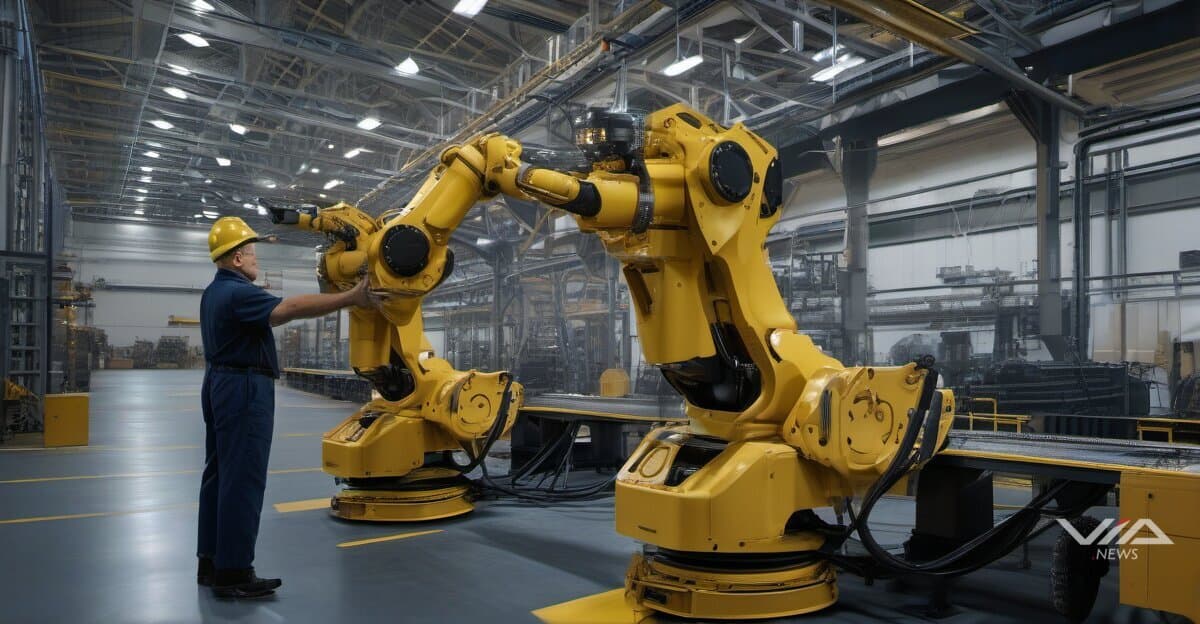
A case study unfolding in real time: HII, the largest U.S. naval shipbuilder, has partnered with Path Robotics to deploy AI-driven autonomous welding systems across its shipyard operations. Welding is among the most labor-intensive and skills-scarce bottlenecks in naval construction, and AI-guided robotic welders offer a structural fix to a workforce constraint that has limited production throughput for years.
This is not a pilot program. HII and its peers are treating autonomous systems as strategic infrastructure — the kind of capital investment that compresses production timelines, reduces defect rates, and ultimately determines whether the United States can meet its naval shipbuilding targets on schedule.
For investors, the HII-Path Robotics partnership is a signal: robotics and AI software companies with defense-grade deployment credentials are entering a capital-rich procurement environment where federal dollars provide both revenue visibility and margin support.
Howmet's Record Performance Validates the Aerospace Supply Chain Thesis
The aerospace component of this story is equally compelling. Howmet Aerospace, a specialist in titanium and aluminum precision components for jet engines and airframes, has reported record financial performance — a direct reflection of both commercial aerospace recovery and defense demand running simultaneously at elevated levels.
Howmet's results underscore a broader dynamic: the defense industrial base does not source components in isolation. It draws on an aerospace supply chain that serves commercial aviation in parallel, meaning suppliers with dual-market exposure are operating near full capacity and benefiting from pricing power they have not seen in years.
For investors seeking exposure to defense capital spending without the concentration risk of prime contractors, aerospace precision manufacturers represent a compelling risk-adjusted entry point.
Autonomous Ground Support: The Adjacent Opportunity
Beyond shipbuilding and aerospace, autonomous systems are penetrating defense-adjacent logistics. Driverless ground support vehicles are transitioning from experimental programs to operational deployments at military installations and defense-linked industrial facilities. The pattern mirrors what occurred in commercial warehousing — a multi-year rollout that rewarded early-stage automation suppliers with long-duration contracts.
Investment Implications
The convergence of record defense authorization levels, structural manufacturing labor shortages, and proven autonomous systems creates what analysts are describing as a capital supercycle for advanced manufacturing automation. Companies positioned at the nexus of AI-driven industrial robotics, aerospace precision components, and defense logistics automation are entering a procurement environment characterized by budget certainty, multi-year contract structures, and government-backed demand floors.
The narrative is emerging — confidence is building — but the capital deployment is already underway. For investors oriented toward defense and industrial technology, the infrastructure of the next-generation military-industrial complex is being assembled now.