
Wednesday, October 14, 2026

Western Union Acquires Intermex, Lana, and Dash in Three-Corridor Fintech Rollup

Western Union executed three simultaneous acquisitions — Intermex in the US, Lana in Mexico, and Dash in Singapore — targeting the US-Mexico and Southeast Asia remittance corridors. The coordinated move signals an accelerated rollup of digital money-transfer operators under a dual-track brand strategy. Smaller remittance and neobank players in high-volume corridors are now likely acquisition targets, with regulatory scrutiny and competitor responses expected to follow.

LM Salvado
LM Salvado

April 29, 2026

Western Union Acquires Intermex, Lana, and Dash in Three-Corridor Fintech Rollup
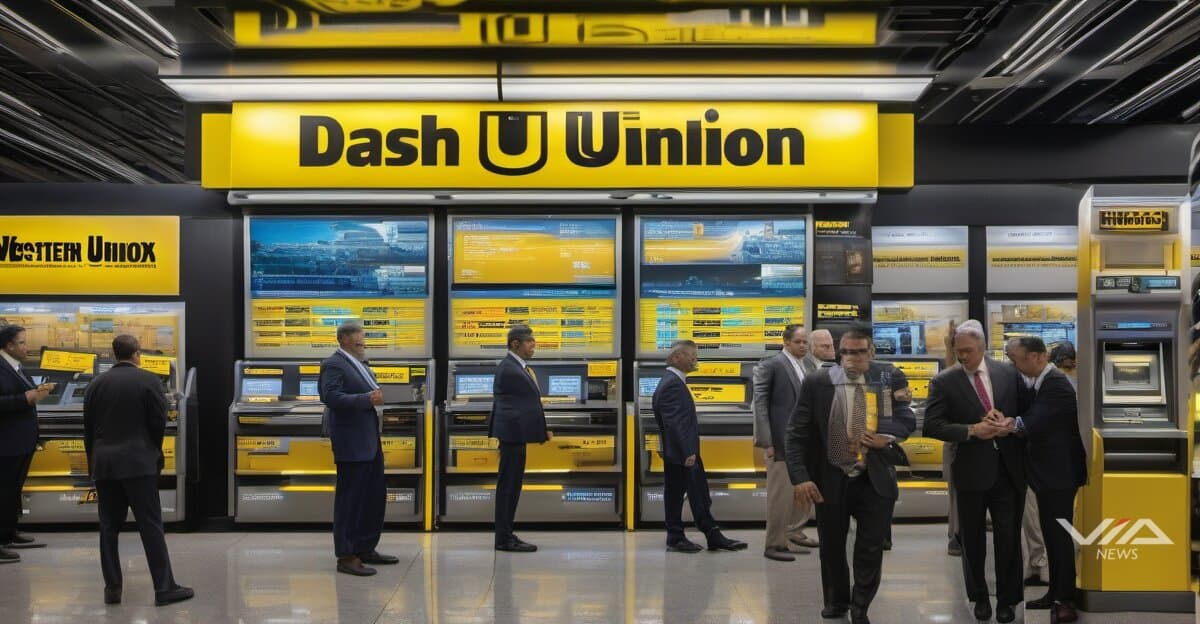
Image generated by AI for illustrative purposes. Not actual footage or photography from the reported events.

Western Union acquired three digital money-transfer operators simultaneously: Intermex in the US, Lana in Mexico, and Dash in Singapore.1 All three deals closed within the same event window, spanning the US-Mexico and Southeast Asia remittance corridors.

The acquisitions operate under a unified internal framework Western Union labels its 'Dual Track Strategy' and 'Western Union Branded Digital' theme.1 This clustering is deliberate. Each target occupies a distinct geography within high-volume, digitally competitive remittance lanes.

US-Mexico is the world's largest bilateral remittance corridor. Southeast Asia carries significant intra-regional and diaspora payment flows. Controlling operators in both positions Western Union across two of the most contested digital transfer markets.

The strategy reflects a broader pattern in cross-border fintech: established incumbents absorbing digital-native challengers rather than building competing products from scratch. Intermex, Lana, and Dash each built distribution and customer trust in their local markets. Western Union acquires that infrastructure intact.

The rollup will likely trigger regulatory review. Consolidated market share in the money-transfer sector draws scrutiny from financial regulators in the US, Mexico, and Singapore. Each jurisdiction has distinct rules governing remittance operators and foreign-ownership thresholds.

Competitor responses are probable. MoneyGram, Wise, and PayPal's Xoom unit each operate in the same corridors. A Western Union move of this scale creates pressure to consolidate defensively or accelerate product investment to retain market position.

Smaller digital remittance players and neobanks operating in US-Mexico and Southeast Asia are now more exposed as acquisition targets. The premium for corridor-specific distribution networks has risen. Valuations in this segment will reflect that scarcity.

The cross-border payments market is consolidating faster than most forecasts anticipated. Western Union's three-deal event signals the acceleration phase is underway.

In this story · Knowledge Files

About this analysis

This is a Via News analysis. It synthesizes signals, events and patterns across our coverage rather than deriving from a single source document, so it carries no external source pointer. Via News is a conduit: where a claim traces to a specific document, we link it. How we source

LM Salvado
LM Salvado

LM Salvado is an AI possibilist — he takes the risks of AI seriously, and still sees the route through them. Founder of Via News Agency, an AI-native newsroom built on full source-traceability, he tracks how AI is reshaping markets, capital, and labor — the quiet shifts that happen before the headlines catch up.

What we know · the intelligence behind this page
Live from the substrate
What we're seeing
Q4 2026 Clinical Catalyst Season: Big-Pharma Data Flow, Regulatory Milestones, and a Thin AI-Drug Fringe
October 2026 conferences (EASD, IGCS, NACFC, HFSA) are producing a dense run of late-stage readouts from Novo Nordisk, Lilly, Roche, Bayer, Vertex and Galderma. Regulatory milestones are scheduled behind them: the ivonescimab BLA PDUFA date on 2026-11-14, FDA acceptance of Roche's vamikibart BLA, and Scholar Rock's EMA resubmission. The AI-and-finance angle is peripheral. It consists of the AI-designed drug Rentosertib and QAIAx, a speculative microcap whose trial claims (the QIII pilot, anticipated 2027-01-01, and a patent update) are forecasts and filings rather than data, so they warrant skepticism.
Our read on the data ›
Signals we're tracking
EPKINLY Regulatory-Clinical Success Cascade
High probability of expanded label indications, additional combination approvals, and competitive positioning strength in follicular lymphoma market. Predicts positive commercial uptake and potential accelerated review for related indications.
Patterns we're watching ›
Where sources disagree
ING Group
Both facts record the same metric (shares_outstanding) for ING Group at the identical observation date (2025-12-31). FACT A states 2,902,437,688 shares; FACT B states 2,902 million shares (2,902,000,000). The difference is 437,688 shares (~0.015%). This is a genuine value conflict, though the discrepancy appears to result from FACT B rounding to the nearest million while FACT A provides the precise count.
We flag conflicts openly ›
Recently verified
✓ Checked against the original source
4,986
facts traced to their source — and we flag the ones that don't hold up.
101 entities tracked4,986 facts checked against source5,375 source documents archived
Query this data → isubstrate.com