
Wednesday, October 14, 2026

Memory Supply Shortages to Peak in Q1 2026, Creating AI Infrastructure Bottleneck

Intel and Qualcomm face supply constraints expected to peak in Q1 2026 before clearing in Q2, creating volatility in AI hardware deployment. Agentic AI workloads are driving CPU demand inflection while memory shortages create competitive advantages for companies with secured supply chains.

LM Salvado
LM Salvado

April 19, 2026

Memory Supply Shortages to Peak in Q1 2026, Creating AI Infrastructure Bottleneck
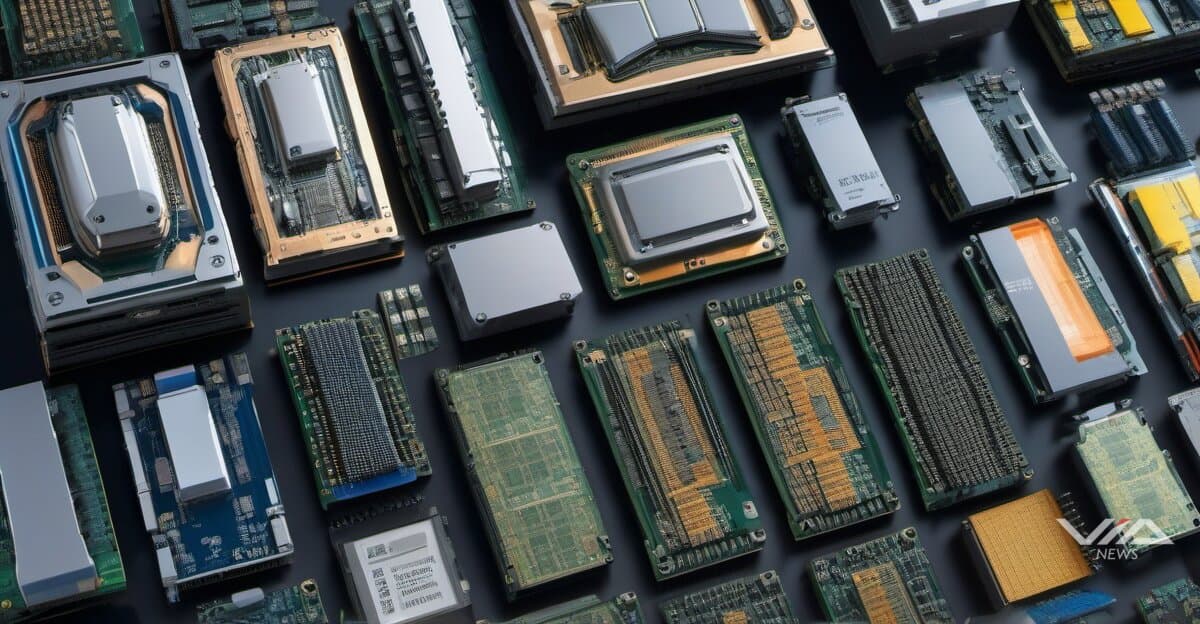
Image generated by AI for illustrative purposes. Not actual footage or photography from the reported events.

Memory supply shortages will peak in Q1 2026, constraining AI infrastructure deployment and PC builds before clearing in subsequent quarters.1 Intel confirmed it cannot meet strong demand during this period, with supply constraints expected to ease starting in Q2 2026, leading to above-seasonal quarterly results.1

The shortage is affecting PC builds and creating near-term pressure across the technology sector.1,2 Qualcomm faces dual headwinds from the memory supply shortage and market share loss in smartphones, according to JPMorgan.2

Agentic AI workloads are driving an inflection in CPU demand, compounding the supply-demand imbalance.1 This new workload category requires different compute architectures than traditional AI training and inference, intensifying competition for memory components across the semiconductor industry.

Wall Street analysts are repositioning ahead of the Q1 bottleneck. Susquehanna raised its Intel price target, anticipating the company will benefit from easing constraints in Q2.1 JPMorgan downgraded Fabrinet and Corning, signaling concern about component suppliers exposed to the shortage.2

The memory constraint creates a temporary competitive moat for technology companies with secured supply chains. Enterprises planning AI infrastructure deployments face difficult capital allocation decisions: delay projects until Q2 when supply improves, or pay premium prices for scarce components in Q1.

AI hardware stocks face increased volatility through the constraint period. Companies that secured long-term memory supply agreements will report stronger Q1 results relative to peers, while those dependent on spot markets face margin compression or revenue delays.

The Q1-to-Q2 sequential growth comparison will reveal which companies navigated the bottleneck successfully. Memory spot prices for DRAM and high-bandwidth memory (HBM) serve as real-time indicators of constraint severity, with pricing normalization signaling supply recovery.

Corporate technology budgets face pressure to either accelerate Q4 2025 purchases before constraints worsen or defer to Q2 2026 when supply stabilizes. This timing decision affects fiscal year technology spending patterns and vendor selection criteria, favoring suppliers who can guarantee delivery schedules.

In this story · Knowledge Files

About this analysis

This is a Via News analysis. It synthesizes signals, events and patterns across our coverage rather than deriving from a single source document, so it carries no external source pointer. Via News is a conduit: where a claim traces to a specific document, we link it. How we source

LM Salvado
LM Salvado

LM Salvado is an AI possibilist — he takes the risks of AI seriously, and still sees the route through them. Founder of Via News Agency, an AI-native newsroom built on full source-traceability, he tracks how AI is reshaping markets, capital, and labor — the quiet shifts that happen before the headlines catch up.

What we know · the intelligence behind this page
Live from the substrate
What we're seeing
Q4 2026 Clinical Catalyst Season: Big-Pharma Data Flow, Regulatory Milestones, and a Thin AI-Drug Fringe
October 2026 conferences (EASD, IGCS, NACFC, HFSA) are producing a dense run of late-stage readouts from Novo Nordisk, Lilly, Roche, Bayer, Vertex and Galderma. Regulatory milestones are scheduled behind them: the ivonescimab BLA PDUFA date on 2026-11-14, FDA acceptance of Roche's vamikibart BLA, and Scholar Rock's EMA resubmission. The AI-and-finance angle is peripheral. It consists of the AI-designed drug Rentosertib and QAIAx, a speculative microcap whose trial claims (the QIII pilot, anticipated 2027-01-01, and a patent update) are forecasts and filings rather than data, so they warrant skepticism.
Our read on the data ›
Signals we're tracking
EPKINLY Regulatory-Clinical Success Cascade
High probability of expanded label indications, additional combination approvals, and competitive positioning strength in follicular lymphoma market. Predicts positive commercial uptake and potential accelerated review for related indications.
Patterns we're watching ›
Where sources disagree
ING Group
Both facts record the same metric (shares_outstanding) for ING Group at the identical observation date (2025-12-31). FACT A states 2,902,437,688 shares; FACT B states 2,902 million shares (2,902,000,000). The difference is 437,688 shares (~0.015%). This is a genuine value conflict, though the discrepancy appears to result from FACT B rounding to the nearest million while FACT A provides the precise count.
We flag conflicts openly ›
Recently verified
✓ Checked against the original source
4,986
facts traced to their source — and we flag the ones that don't hold up.
101 entities tracked4,986 facts checked against source5,375 source documents archived
Query this data → isubstrate.com