

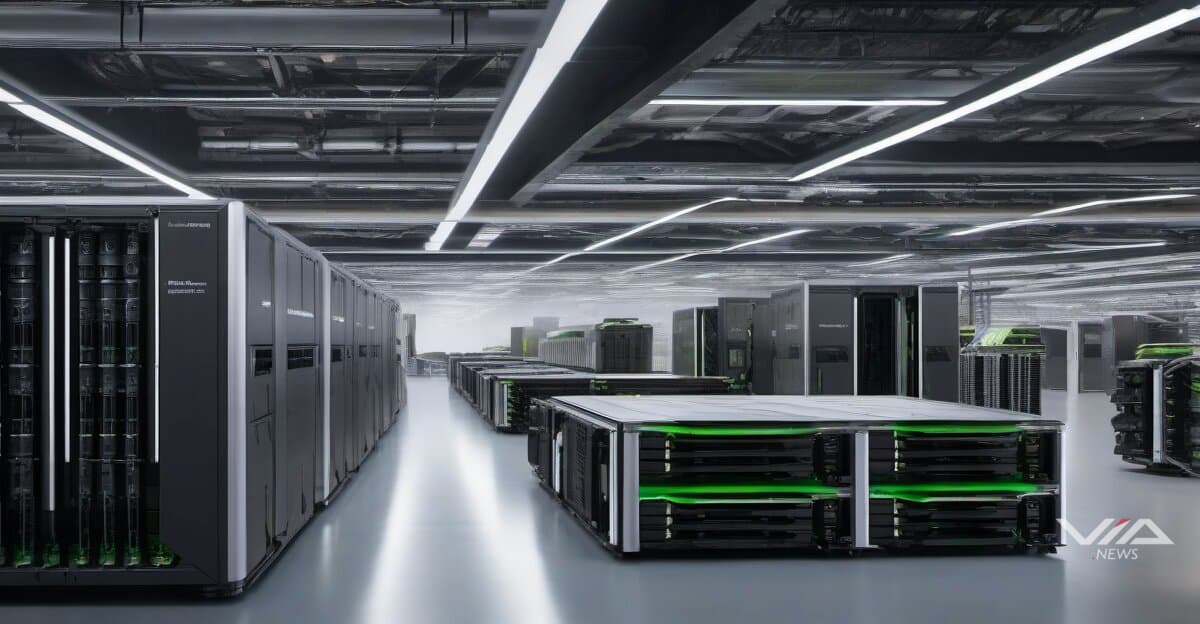
NVIDIA announced its Space Computing Platform and Space-1 Vera Rubin Module on March 16, 2026, entering the orbital computing market with domain-optimized AI infrastructure.
The company simultaneously launched warehouse automation solutions through partnerships with KION, Siemens, and Accenture. These collaborations target logistics operations with AI-powered robotics and inventory management systems.
In semiconductor design, three major EDA vendors released AI agents on NVIDIA infrastructure the same day. Cadence introduced ChipStack AI SuperAgent, Siemens launched Fuse EDA AI Agent, and Synopsys deployed AgentEngineer. These tools automate chip design workflows that traditionally required extensive manual engineering.
The vertical platform strategy represents a shift from NVIDIA's general-purpose GPU sales model. Rather than selling compute hardware for customers to adapt, the company now delivers pre-configured AI solutions for specific industries.
Space computing addresses satellite data processing and orbital edge computing. On-board AI processing reduces data transmission costs and latency for earth observation and communications satellites. AI-driven robotics handle inventory tracking, route optimization, and predictive maintenance across distribution centers.
Semiconductor design automation tackles chip complexity as transistor counts exceed 100 billion per processor. AI agents accelerate design verification, power optimization, and layout tasks that bottleneck development cycles.
NVIDIA partners with industrial software giants to distribute these platforms. Siemens and Accenture bring existing enterprise customer relationships, while KION provides warehouse equipment integration.
The vertical approach creates higher-margin recurring revenue from software and services versus one-time hardware sales. Enterprise adoption depends on demonstrating ROI in operational efficiency and development speed across target sectors.