
Wednesday, October 14, 2026

Huawei 950PR Chip Gains Traction as ByteDance and Alibaba Plan Orders Amid US Export Restrictions

Chinese tech giants ByteDance and Alibaba are preparing orders for Huawei's 950PR AI chip following successful testing. The domestic chip adoption accelerates as US export restrictions limit access to Nvidia's AI processors, with Huawei targeting 750,000 chip shipments this year.

LM Salvado
LM Salvado

March 30, 2026

Huawei 950PR Chip Gains Traction as ByteDance and Alibaba Plan Orders Amid US Export Restrictions
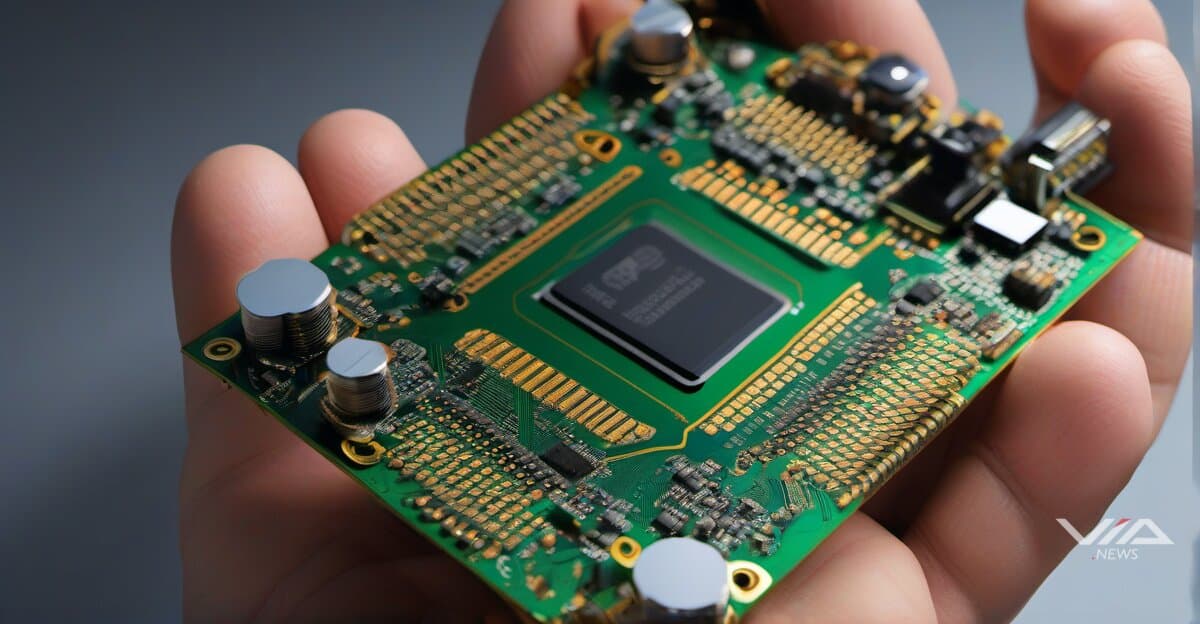
Image generated by AI for illustrative purposes. Not actual footage or photography from the reported events.

ByteDance and Alibaba are moving forward with purchase plans for Huawei's 950PR AI chip after customer testing validated the processor's performance. The shift comes as US export restrictions block sales of many Nvidia AI chips to Chinese buyers.

Huawei aims to ship approximately 750,000 units of the 950PR chip in 2026. The processor addresses a critical pain point for Chinese developers: migration from existing CUDA-based systems. Tech firms report greater satisfaction with the 950PR's compatibility compared to previous domestic alternatives.

US export bans on advanced Nvidia processors triggered China's domestic semiconductor push. The government campaign encourages Chinese companies to adopt locally-produced chips rather than imported silicon. The 950PR represents Huawei's response to fill the gap left by restricted Nvidia H200 and similar high-performance AI chips.

The compatibility advantage proves decisive for adoption decisions. Chinese developers built their AI models using Nvidia's CUDA software framework, making migration to incompatible systems costly and time-intensive. The 950PR's improved compatibility with CUDA workflows lowers switching barriers.

ByteDance and Alibaba operate massive AI infrastructure supporting services from recommendation algorithms to cloud computing. Their planned orders signal potential market share shifts in China's AI chip sector. Actual order volumes and deployment timelines will determine whether Huawei captures substantial ground from Nvidia's previous dominance.

The 950PR rollout tests whether Chinese chipmakers can deliver competitive alternatives under technology restrictions. Developer migration rates from CUDA to Huawei's CANN software system will indicate long-term viability of the domestic chip ecosystem.

In this story · Knowledge Files

About this analysis

This is a Via News analysis. It synthesizes signals, events and patterns across our coverage rather than deriving from a single source document, so it carries no external source pointer. Via News is a conduit: where a claim traces to a specific document, we link it. How we source

LM Salvado
LM Salvado

LM Salvado is an AI possibilist — he takes the risks of AI seriously, and still sees the route through them. Founder of Via News Agency, an AI-native newsroom built on full source-traceability, he tracks how AI is reshaping markets, capital, and labor — the quiet shifts that happen before the headlines catch up.

What we know · the intelligence behind this page
Live from the substrate
What we're seeing
Q4 2026 Clinical Catalyst Season: Big-Pharma Data Flow, Regulatory Milestones, and a Thin AI-Drug Fringe
October 2026 conferences (EASD, IGCS, NACFC, HFSA) are producing a dense run of late-stage readouts from Novo Nordisk, Lilly, Roche, Bayer, Vertex and Galderma. Regulatory milestones are scheduled behind them: the ivonescimab BLA PDUFA date on 2026-11-14, FDA acceptance of Roche's vamikibart BLA, and Scholar Rock's EMA resubmission. The AI-and-finance angle is peripheral. It consists of the AI-designed drug Rentosertib and QAIAx, a speculative microcap whose trial claims (the QIII pilot, anticipated 2027-01-01, and a patent update) are forecasts and filings rather than data, so they warrant skepticism.
Our read on the data ›
Signals we're tracking
EPKINLY Regulatory-Clinical Success Cascade
High probability of expanded label indications, additional combination approvals, and competitive positioning strength in follicular lymphoma market. Predicts positive commercial uptake and potential accelerated review for related indications.
Patterns we're watching ›
Where sources disagree
ING Group
Both facts record the same metric (shares_outstanding) for ING Group at the identical observation date (2025-12-31). FACT A states 2,902,437,688 shares; FACT B states 2,902 million shares (2,902,000,000). The difference is 437,688 shares (~0.015%). This is a genuine value conflict, though the discrepancy appears to result from FACT B rounding to the nearest million while FACT A provides the precise count.
We flag conflicts openly ›
Recently verified
✓ Checked against the original source
4,986
facts traced to their source — and we flag the ones that don't hold up.
101 entities tracked4,986 facts checked against source5,375 source documents archived
Query this data → isubstrate.com