
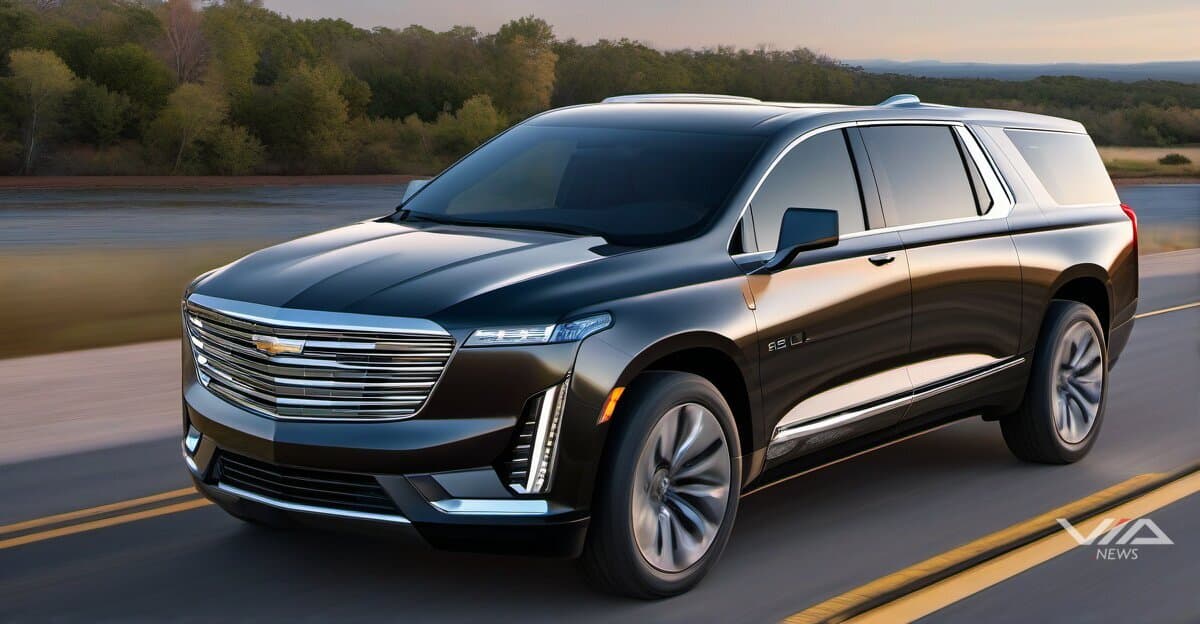
General Motors is doubling down on autonomous vehicle technology, announcing plans to launch eyes-off, hands-off Level 3 highway driving on the Cadillac Escalade in 2028 — a capital-intensive bet that underscores how the Detroit automaker intends to deploy its newly fortified balance sheet in the race for automotive supremacy.
The announcement, disclosed during GM's Q4 2025 earnings call on January 27, 2026, comes as the company reported full-year adjusted EBIT of $12.7 billion — the high end of its guidance range — and adjusted automotive free cash flow of $10.6 billion, a figure that represents a dramatic improvement from the roughly $3 billion annual average the company posted five years ago.
The L3 system, which will rely on a redundant sensor stack combining LIDAR, radar, and cameras, represents a meaningful technological threshold. Unlike Level 2 systems that require constant driver attention, Level 3 automation allows drivers to fully disengage under defined conditions — a distinction that carries both regulatory complexity and significant consumer appeal, particularly in a flagship luxury nameplate like the Escalade.
Strategic Spending Against a Backdrop of Restructuring
GM's autonomous driving ambition arrives at a moment of substantial capital reallocation. The company is guiding for $10–12 billion in annual capital expenditure in 2026 and 2027, with approximately $5 billion earmarked for U.S. manufacturing expansion. Meanwhile, headwinds from onshoring, supply chain investment, and software development are projected to cost $1–1.5 billion annually — roughly half of which is tied to software and technology initiatives.
That investment backdrop makes the 2028 L3 target a clear strategic signal: even as GM absorbs $7.6 billion in EV-related charges accumulated across Q3 and Q4 2025 — driven by softer-than-expected EV demand, policy shifts, and the termination of consumer tax credits — the company is not retreating from advanced technology. It is redirecting it.
CEO Mary Barra has consistently framed GM's technology roadmap as a long-term competitive differentiator. With $21.7 billion in cash on hand at year-end 2025 and a new $6 billion share buyback authorization in place, the company has financial flexibility to fund R&D while simultaneously returning capital to shareholders — a balancing act that analysts will watch closely.
Competitive Implications
The 2028 timeline puts GM in direct competition with Mercedes-Benz, which has already received limited L3 certification in select markets, and Tesla, which continues to push its Full Self-Driving suite toward higher autonomy levels. For investors, the question is whether GM can translate its manufacturing scale and brand equity — particularly within the premium Cadillac segment — into a credible autonomous driving franchise.
The Escalade's selection as the launch vehicle is itself a strategic choice. As one of GM's highest-margin products, it provides a commercial environment where customers may be more willing to pay a premium for advanced driver assistance, and where regulatory scrutiny of initial deployments can be managed more carefully than in mass-market vehicles.
GM's 2026 EBIT guidance of $13–15 billion and EPS forecast of $11–13 per diluted share suggest the company expects its core business to remain robust enough to fund the autonomous push without compromising near-term profitability. Whether the 2028 L3 launch arrives on schedule — and whether it finds a receptive regulatory environment — will be a defining test of that strategy.