
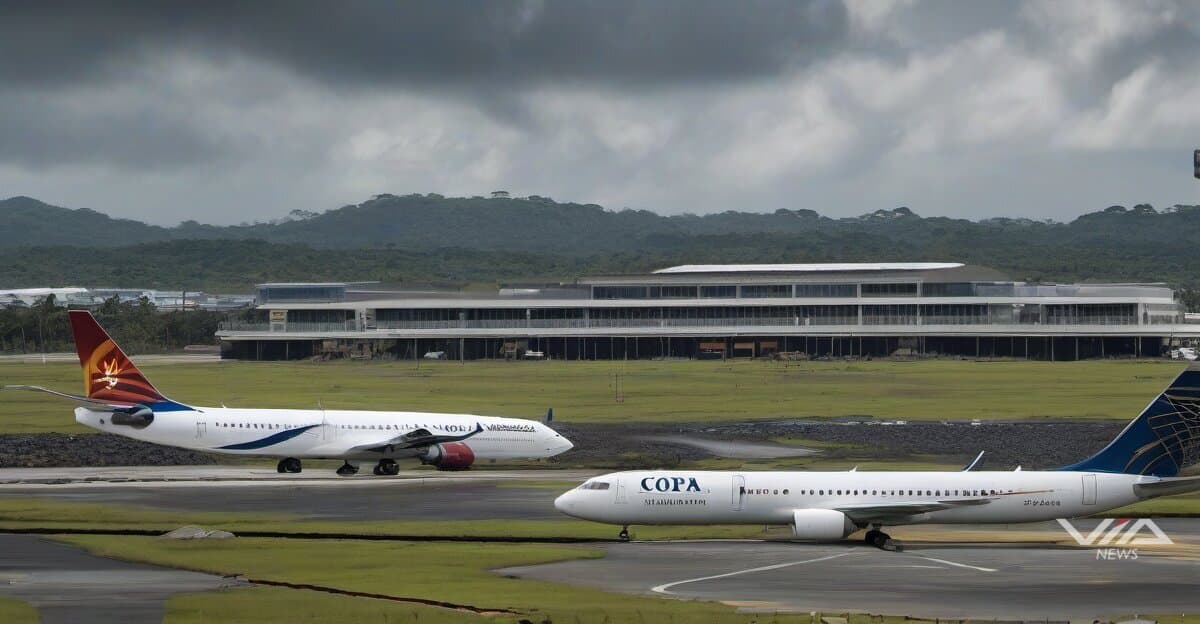
Copa Holdings, S.A. (NYSE: CPA), the Panama-based carrier widely regarded as one of Latin America's most operationally efficient airlines, has built its competitive advantage on a hub-and-spoke model centered on Tocumen International Airport. That same architecture, however, introduces a single-point-of-failure exposure that risk analysts are increasingly flagging as a material concern for investors.
According to a risk assessment conducted in February 2026, the concentration of Copa's network around Tocumen carries a catastrophic severity rating — meaning a disruption at that single facility could functionally ground the airline's entire Latin American operation. While the assessed likelihood remains low, the confidence level of 0.70 suggests analysts see enough structural vulnerability to treat this as a standing rather than theoretical risk.
The Anatomy of Hub Dependency
Tocumen serves as the connective tissue of Copa's route map, linking over 80 destinations across North America, South America, the Caribbean, and Europe. Unlike carriers that distribute operations across multiple regional hubs — a model adopted by major U.S. and European airlines precisely to hedge against localized disruption — Copa routes a disproportionate share of its passenger and cargo traffic through a single chokepoint.
The implications are significant. A prolonged closure of Tocumen due to a tropical weather event, runway infrastructure failure, air traffic control outage, or even a geopolitical incident in Panama would not merely delay flights — it would sever connectivity across the entire network simultaneously. For an airline whose business model depends on the seamless transfer of passengers between long-haul and regional routes, that kind of systemic disruption carries consequences well beyond a typical operational setback.
Financial Exposure for CPA Shareholders
For investors holding Copa Holdings stock, the risk translates into specific financial vulnerabilities. Revenue concentration follows geographic concentration: Copa's traffic flows are overwhelmingly dependent on Tocumen functioning at capacity. In fiscal terms, any multi-day shutdown could trigger revenue losses across dozens of routes in parallel, rather than isolating damage to a single corridor as would occur with a more distributed network.
The airline's cargo operations — a segment that has delivered meaningful margin contributions in recent years — face the same exposure. Tocumen handles a substantial volume of Latin American air freight, and disruption there would affect Copa's cargo revenue streams alongside its passenger business.
Insurance coverage and business continuity planning can partially offset these risks, but they cannot fully substitute for network redundancy. Analysts covering the airline sector have noted that Copa's operational efficiency metrics, while impressive, are partly a function of the very centralization that creates this vulnerability.
Comparative Risk Context
In the broader aviation investment landscape, hub concentration risk is not unique to Copa. However, carriers with multiple hub options — such as LATAM Airlines operating across Santiago, Lima, and São Paulo — have structural buffers that Copa currently lacks. Panama's geographic position as a natural transit point for hemispheric travel is a genuine strategic asset, but it also means Copa has limited incentive to diversify away from Tocumen, even as the risk persists.
For institutional investors and equity analysts, the February 2026 risk assessment serves as a reminder that Copa's strong operational track record exists within a structural framework that has yet to be stress-tested by a major Tocumen disruption. That untested quality is precisely what makes the concentration risk difficult to price — and difficult to dismiss.