
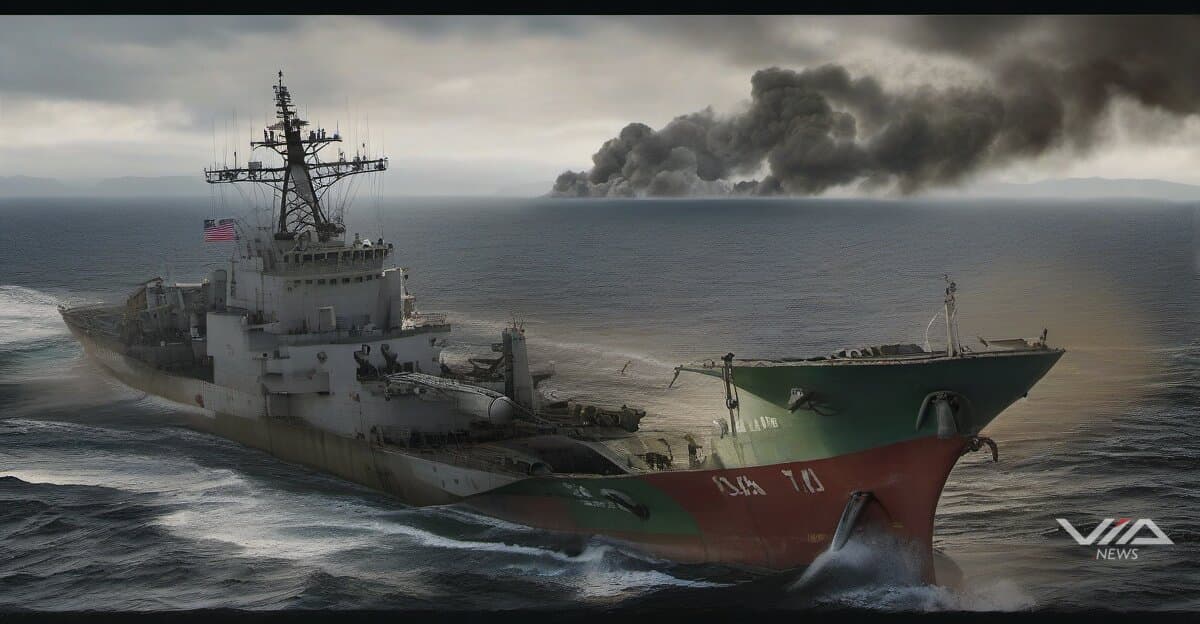
When MSCI confirmed Hon. Precision's addition to its Emerging Markets Index in February 2026 — ranking it among the three largest inclusions by full company market capitalization in that review cycle — the announcement was greeted as a validation of Taiwan's precision manufacturing sector. But beneath the headline sits a risk profile that portfolio managers are only beginning to fully price: the company's deep exposure to cross-strait geopolitical volatility.
Hon. Precision operates at the intersection of two of the world's most consequential fault lines — the technology supply chain and the Taiwan Strait. With a catastrophic-severity, medium-likelihood risk assessment attached to its geopolitical exposure, the company's MSCI inclusion effectively imports that risk into the portfolios of every passive fund tracking the index globally.
What MSCI Inclusion Actually Means for Risk Transmission
Index inclusion is not merely a prestige event. It triggers mandatory buying from the trillions of dollars benchmarked against MSCI's Emerging Markets Index, distributing Hon. Precision's equity — and its embedded geopolitical risk — across pension funds, sovereign wealth funds, and retail ETFs worldwide. Analysts estimate that a company of Hon. Precision's capitalization weight could attract several hundred million dollars in passive inflows within weeks of its effective inclusion date.
That capital transmission mechanism works in reverse too. Any material escalation in cross-strait tensions — whether a naval incident, new sanctions regime, or shift in U.S. or European policy toward Taiwan — could trigger rapid institutional de-risking. The forced selling dynamic that accompanies sudden geopolitical shocks is well-documented: in 2022, Russian equities were effectively zeroed out of global indices within days of the invasion of Ukraine, leaving late-exit investors with catastrophic losses.
Supply Chain Concentration Amplifies the Exposure
For Hon. Precision, the risk is not limited to capital markets. As a precision manufacturer likely embedded in semiconductor and electronics supply chains, the company's operational continuity is directly tied to the stability of Taiwan's business environment. Any disruption to shipping lanes, port access, or cross-strait commerce — even short of military conflict — would reverberate through the global technology supply chain, affecting customers and counterparties far beyond the company itself.
Corporate treasurers and procurement officers at multinational firms sourcing from Taiwan are increasingly required to model scenario analyses that were once considered extreme tail risks. Insurance underwriters, too, have begun adjusting premiums for Taiwanese counterparty exposure, a quiet but telling signal of how risk professionals are repositioning.
Confidence Levels and the Limits of Assessment
The geopolitical risk assessment attached to Hon. Precision carries a confidence level of 0.7 — reflecting meaningful uncertainty in both the likelihood and timing of escalation. This is consistent with how most serious geopolitical risk frameworks treat Taiwan: not as an imminent crisis, but as a structural vulnerability that demands scenario planning rather than dismissal.
For institutional investors, the practical implication is a need for enhanced disclosures and stress-testing frameworks. MSCI and other index providers have faced growing pressure from asset managers to incorporate geopolitical scenario weights into index construction, particularly for high-concentration single-country exposures.
Hon. Precision's entry into the global investment mainstream is, in many respects, a mirror held up to the broader tension between capital's appetite for emerging market growth and its aversion to systemic geopolitical risk. For now, the market has chosen inclusion — but the hedging conversation has already begun.