
Thursday, October 15, 2026

American Express commits to 2 World Trade Center with planned 2031 occupancy

American Express will occupy space at 2 World Trade Center starting in 2031, marking a major corporate commitment to Lower Manhattan's office market. The financial services giant expects to begin moving colleagues into the new building at the start of the decade, signaling confidence in premium office real estate.

Source Trace Score1 source document1 with a live linkVerifiability: Basic
American Express commits to 2 World Trade Center with planned 2031 occupancy
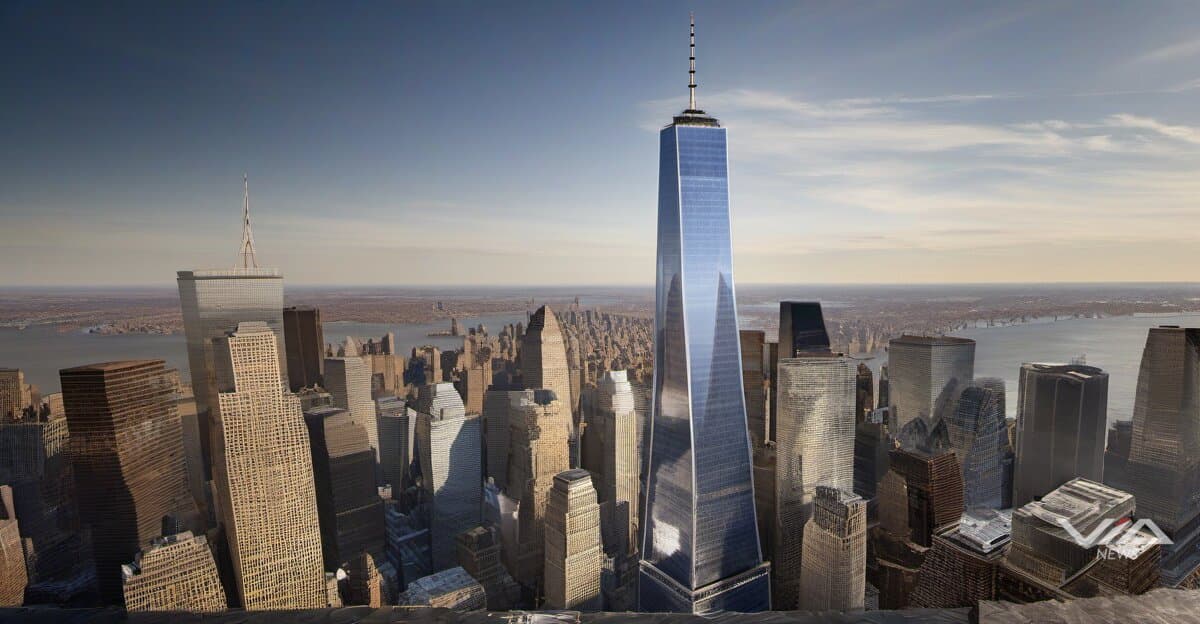
Image generated by AI for illustrative purposes. Not actual footage or photography from the reported events.

American Express will begin occupying 2 World Trade Center in 2031, the company announced, representing one of the largest corporate commitments to New York City's rebuilding World Trade Center complex.

The financial services company expects to welcome employees to the new building at 2 World Trade Center starting January 2031. The move positions American Express as an anchor tenant in the final tower planned for the World Trade Center site.

The commitment comes as corporations reassess their office footprints following pandemic-era shifts to remote work. American Express's decision to secure space in a premium development signals its strategy to consolidate operations in modern, amenity-rich buildings rather than abandon office real estate entirely.

2 World Trade Center has faced delays since the original World Trade Center towers fell in 2001. Developer Silverstein Properties has sought major tenants to justify completing construction on the site, which sits between the existing 1 World Trade Center and 3 World Trade Center buildings.

The building's completion timeline now aligns with American Express's occupancy plans. Large pre-lease commitments from companies like American Express typically serve as catalysts for developers to begin vertical construction on speculative office towers.

American Express currently maintains significant office presence in New York City, with operations spread across multiple locations. The consolidation into 2 World Trade Center would allow the company to bring employees into a single state-of-the-art facility designed for modern workplace requirements.

Lower Manhattan's office market has seen mixed results in recent years, with older buildings struggling to attract tenants while new construction commands premium rents. The World Trade Center complex offers direct transit access, outdoor spaces, and building systems designed for post-pandemic workplace standards.

Financial services firms have led the return-to-office push more aggressively than technology companies, with major banks requiring employees to work in person multiple days per week. American Express's long-term commitment to physical office space reflects this sector trend.

The 2031 timeline gives American Express seven years to plan its workplace strategy and design custom build-outs within the new tower. The extended lead time also allows the developer to complete construction without rushing timelines.

Source documents

Via News is a conduit. We point to the source documents behind this report — we don't replace them. Trace any claim to its source and decide what to trust. How we source

Source Trace Score1 source document1 with a live linkVerifiability: Basic
  1. [1]News articleYahoo Finance· February 25, 2026
    American Express to Build New State-of-the-Art Global Headquarters at 2 World Trade Center, Deepening Commitment to Lower Manhattan

In this story · Knowledge Files

What we know · the intelligence behind this page
Live from the substrate
What we're seeing
Q4 2026 Clinical Catalyst Season: Big-Pharma Data Flow, Regulatory Milestones, and a Thin AI-Drug Fringe
October 2026 conferences (EASD, IGCS, NACFC, HFSA) are producing a dense run of late-stage readouts from Novo Nordisk, Lilly, Roche, Bayer, Vertex and Galderma. Regulatory milestones are scheduled behind them: the ivonescimab BLA PDUFA date on 2026-11-14, FDA acceptance of Roche's vamikibart BLA, and Scholar Rock's EMA resubmission. The AI-and-finance angle is peripheral. It consists of the AI-designed drug Rentosertib and QAIAx, a speculative microcap whose trial claims (the QIII pilot, anticipated 2027-01-01, and a patent update) are forecasts and filings rather than data, so they warrant skepticism.
Our read on the data ›
Signals we're tracking
EPKINLY Regulatory-Clinical Success Cascade
High probability of expanded label indications, additional combination approvals, and competitive positioning strength in follicular lymphoma market. Predicts positive commercial uptake and potential accelerated review for related indications.
Patterns we're watching ›
Where sources disagree
ING Group
Both facts record the same metric (shares_outstanding) for ING Group at the identical observation date (2025-12-31). FACT A states 2,902,437,688 shares; FACT B states 2,902 million shares (2,902,000,000). The difference is 437,688 shares (~0.015%). This is a genuine value conflict, though the discrepancy appears to result from FACT B rounding to the nearest million while FACT A provides the precise count.
We flag conflicts openly ›
Recently verified
✓ Checked against the original source
4,986
facts traced to their source — and we flag the ones that don't hold up.
101 entities tracked4,986 facts checked against source5,375 source documents archived
Query this data → isubstrate.com