
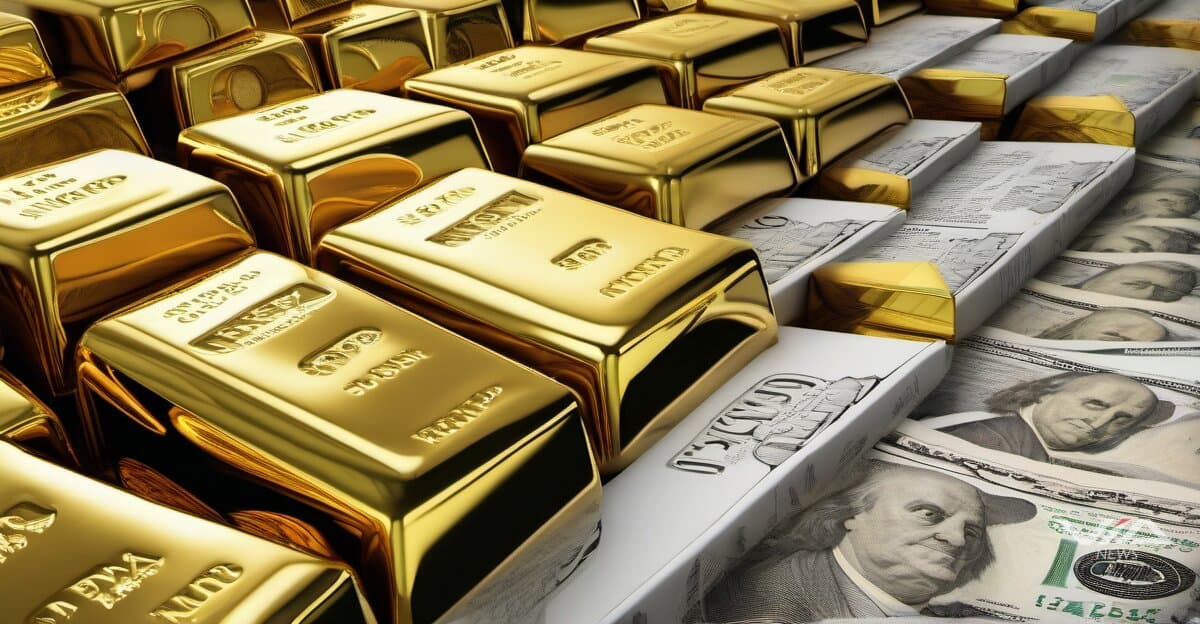
Rio Tinto and Glencore entered preliminary merger discussions in November 2026 as commodity markets showed sharp divergence, with gold futures hitting record $4,200 per ounce while broader equity markets ended winning streaks.
Gold is on pace for its best annual performance since 1979, having surpassed all-time highs more than 50 times during 2025. The rally reflects three key drivers: massive government deficits, increased central bank purchases, and elevated government spending globally.
"We have a tremendous deficit, we also have tremendous government spending and on top of that, tremendous central bank buying," said Michele Schneider, market strategist, explaining the precious metals surge.
The potential Rio Tinto-Glencore combination would create a mining giant with enhanced exposure to critical minerals needed for energy transition. The global antimony mineral market is growing rapidly, fueled by rising flame retardant demand. Battery metals markets project strong growth trajectories.
Traditional energy commodities face uncertainty. Gas prices remain seasonally lower, but oil prices inch higher. "The national average could soon see limited upward movement," said Patrick De Haan, petroleum analyst, noting the correlation between crude and pump prices.
Mining sector consolidation reflects strategic positioning for the energy transition. Critical minerals command premium valuations as manufacturers secure supply chains for electric vehicles and renewable energy infrastructure. Combined operations would provide scale advantages in extraction and processing.
Uranium Energy Corp. exemplifies strategic positioning in nuclear fuels. The company monitors Anfield Energy's business and may adjust its ownership stake through market transactions or private agreements depending on capital requirements and operational performance.
Monetary policy expectations create mixed signals across commodity classes. Precious metals benefit from deficit spending and central bank accumulation. Industrial metals depend on manufacturing demand. Energy commodities respond to geopolitical factors and production decisions.
November 2026 commodity markets showed clear bifurcation between safe-haven assets and growth-dependent materials. Gold's performance contrasts with broader market volatility as investors reassess inflation trajectories and economic growth prospects.
The mining consolidation trend positions major producers to capitalize on energy transition demand while maintaining precious metals exposure as portfolio insurance against fiscal and monetary uncertainty.