OMNIQ Corp reduced its shareholder deficit 71% to $(11.8) million from $(43.9) million year-over-year, while posting a 60% increase in gross profit for 2025.1 The AI-powered fleet management and supply chain company's financial recovery reflects broader market momentum in commercial robotics deployment.
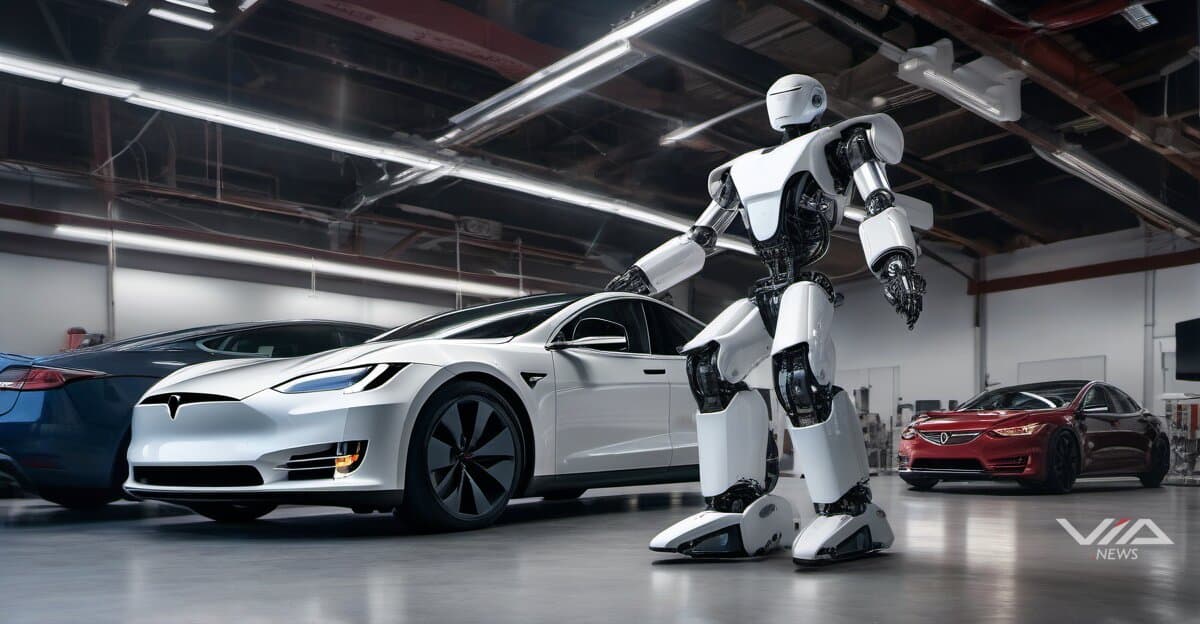
Corporate investment in AI robotics infrastructure is expanding beyond research labs. Tesla plans to commercialize its Optimus humanoid robots by 2027, while Nissan develops next-generation ProPILOT autonomous systems for mass-market vehicles.2 The shift from prototype to production requires substantial capital commitments to manufacturing and compute infrastructure.
IBM partnered with the Illinois Discovery Accelerator Institute to integrate quantum computing with high-performance computing systems, accelerating AI computational capabilities for commercial applications.3 Bull and Equal1 formed a strategic alliance to advance hybrid quantum-HPC integration across Europe, targeting complex optimization problems in logistics and financial modeling.4
Energy infrastructure investments support the expansion. Multiple companies are planning nuclear power plants dedicated to AI compute facilities, addressing the massive electricity demands of training large-scale robotics systems and autonomous vehicle platforms.2
AMC Robotics Corporation delayed its Form 10-K filing to finalize warrant accounting classification under U.S. GAAP, though the company emphasized the technical matter doesn't reflect changes in underlying business operations or financial performance.5 The accounting complexity highlights the rapid evolution of robotics company capital structures as traditional investors increase exposure to the sector.
"When you finally launch the thing you've been working on, and you see the usage go up, it's exhilarating," said Sarang Gupta, an engineer at OpenAI working on product deployment.6 The sentiment captures the transition from development to commercial adoption across AI robotics platforms.
Market applications now span fleet management, e-commerce fulfillment, smart home automation, and industrial manufacturing. The convergence of improved unit economics, proven technical capabilities, and expanding use cases is driving institutional capital allocation toward robotics infrastructure at unprecedented scale.