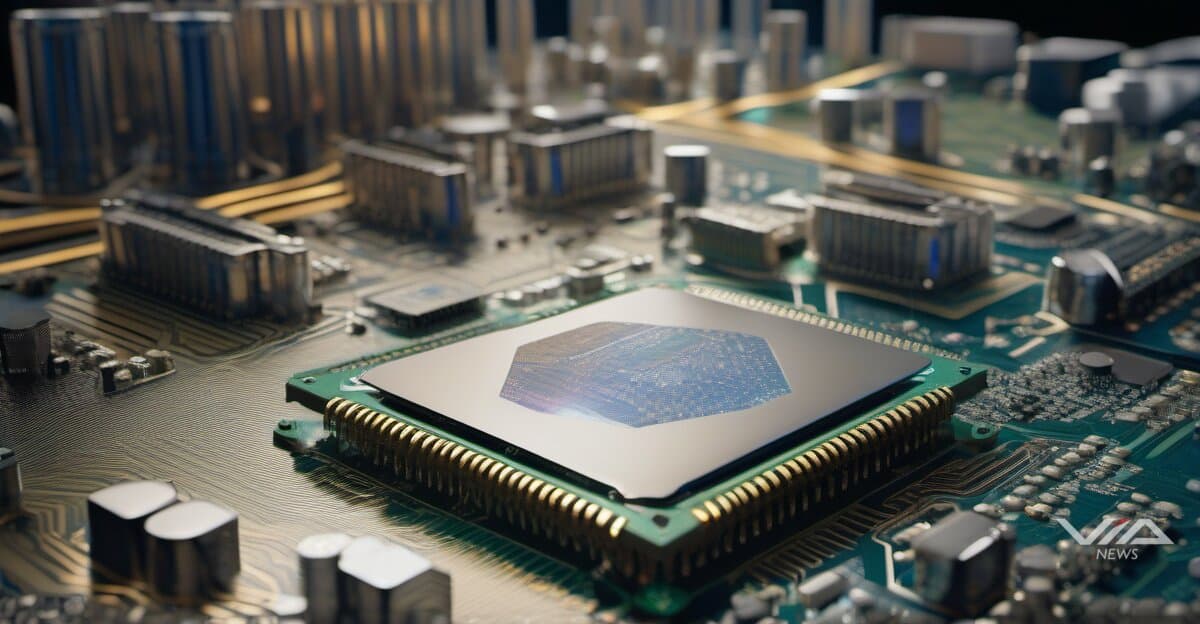
Olix plans to ship its first photonic computing product in 2027, marking the company's entry into commercial semiconductor production.1 The timeline positions Olix among emerging challengers to traditional silicon-based AI chip architectures.
Photonic computing uses light rather than electricity to process data, potentially offering speed and energy efficiency advantages for AI workloads. The technology represents one of several alternatives gaining traction as semiconductor manufacturers diversify beyond conventional chip designs.
The broader AI chip sector is seeing major capital deployment. Nvidia projects $1 trillion in chip sales through 2027, while Micron is expanding high-bandwidth memory (HBM) production facilities to support AI accelerators. These investments reflect structural shifts in semiconductor manufacturing as companies race to secure capacity for next-generation AI systems.
Advanced packaging technologies have emerged as critical bottlenecks in the supply chain. These techniques, which stack and connect multiple chips in single modules, are essential for HBM integration and other high-performance computing applications. Limited packaging capacity is constraining output even as wafer production expands.
Beyond photonic computing, the market is fragmenting into specialized segments. Companies like POET Technologies are developing optical interconnect solutions, while chipmakers introduce dedicated AI inference accelerators such as Tranium and Language Processing Units. This specialization targets specific workload requirements rather than general-purpose computing.
Investment activity spans both established semiconductor manufacturers and venture-backed startups. The sector's capital intensity requires substantial funding to reach production scale, particularly for companies pursuing novel architectures like photonics that lack mature manufacturing ecosystems.
Olix's 2027 target suggests the company has progressed beyond early R&D phases into manufacturing preparation. Photonic chip production requires different fabrication processes than traditional semiconductors, adding complexity to commercialization timelines.