
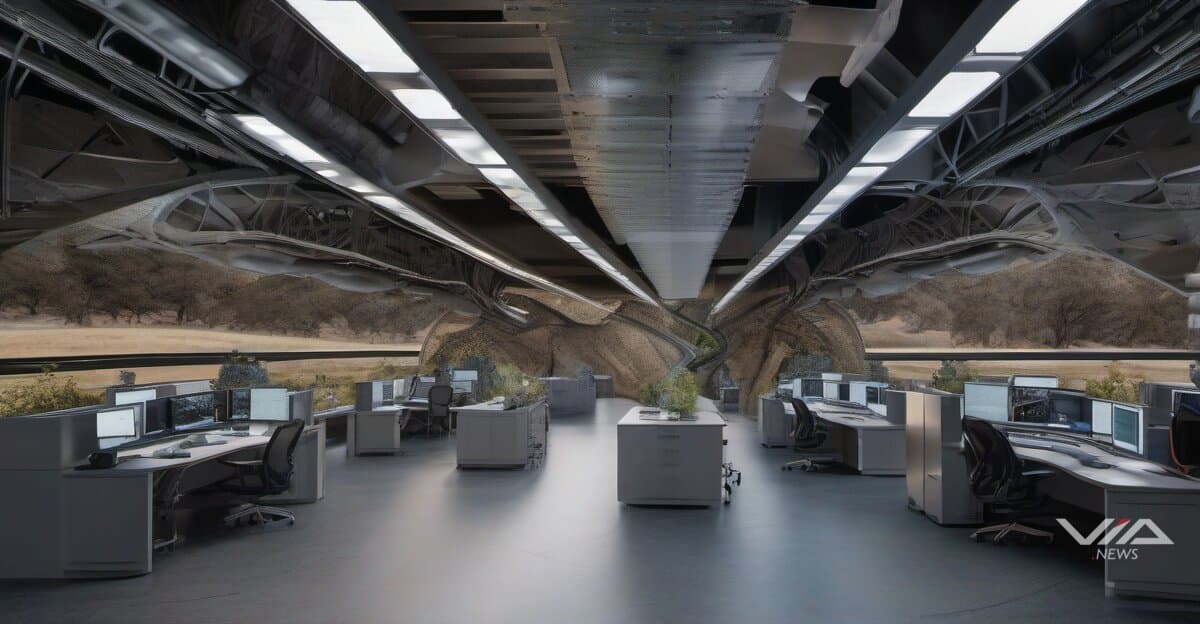
Meta raised its capital expenditure allocation for AI infrastructure in 2026, joining a broader industry push to expand foundation model training capacity. NVIDIA's Blackwell and Hopper GPU architectures are now shipping to hyperscale customers, while AMD positions its ROCm platform as an alternative to NVIDIA's CUDA ecosystem.
The infrastructure buildout supports enterprise deployment of generative AI and large language models. Foundation models require massive compute clusters—GPT-3 training consumed an estimated $4.6 million in compute costs in 2020, and subsequent models have grown substantially larger.
Researchers are addressing practical deployment barriers as spending accelerates. Shahin Atakishiyev's work on SHAP analysis for autonomous vehicles demonstrates how explainable AI helps engineers identify which sensor inputs matter most for driving decisions. "This analysis helps to discard less influential features and pay more attention to the most salient ones," Atakishiyev said.
Autonomous vehicle developers face challenges tailoring explanations to passengers with varying technical backgrounds. Systems must decide whether to provide audio, visual, text, or haptic feedback based on user preferences and cognitive abilities.
Stanford researchers achieved a 20% improvement in robot task performance by training AI systems on human video datasets rather than robot-only data. The Domain-Agnostic Video Discriminator (DVD) model learned from the Something-Something human activity dataset, improving generalization to new environments and tasks.
The research used a Franka Emika Panda robot arm combined with Visual Model-Predictive Control (VMPC) and natural language task descriptions. Earlier systems like LOReL, built on DistilBERT, achieved 66% success rates on five language-specified tasks but struggled with unseen scenarios.
Medical imaging applications also require explainability for regulatory approval and clinical adoption. Neural networks must show which image features drive diagnostic recommendations before doctors will trust AI-assisted readings.
The gap between infrastructure investment and deployment readiness reflects AI's maturation. Companies are betting billions on compute capacity while fundamental questions about model interpretability, safety verification, and real-world robustness remain unresolved. Hardware scaling is outpacing the architectural innovations needed to deploy AI systems in regulated industries.