
Thursday, October 15, 2026

Tech Giants Commit $216B to AI Infrastructure as Chip Demand Surges

Alphabet raised 2025 capex to $91-93B while Amazon allocated $125B, driving combined hyperscaler AI spending above $200B. The investment wave triggered major chip capacity expansions, with Anthropic ordering 1 million Trainium2 chips and OpenAI contracting $250B in Azure services. Micron responded with a $24B Singapore facility expansion.

Tech Giants Commit $216B to AI Infrastructure as Chip Demand Surges
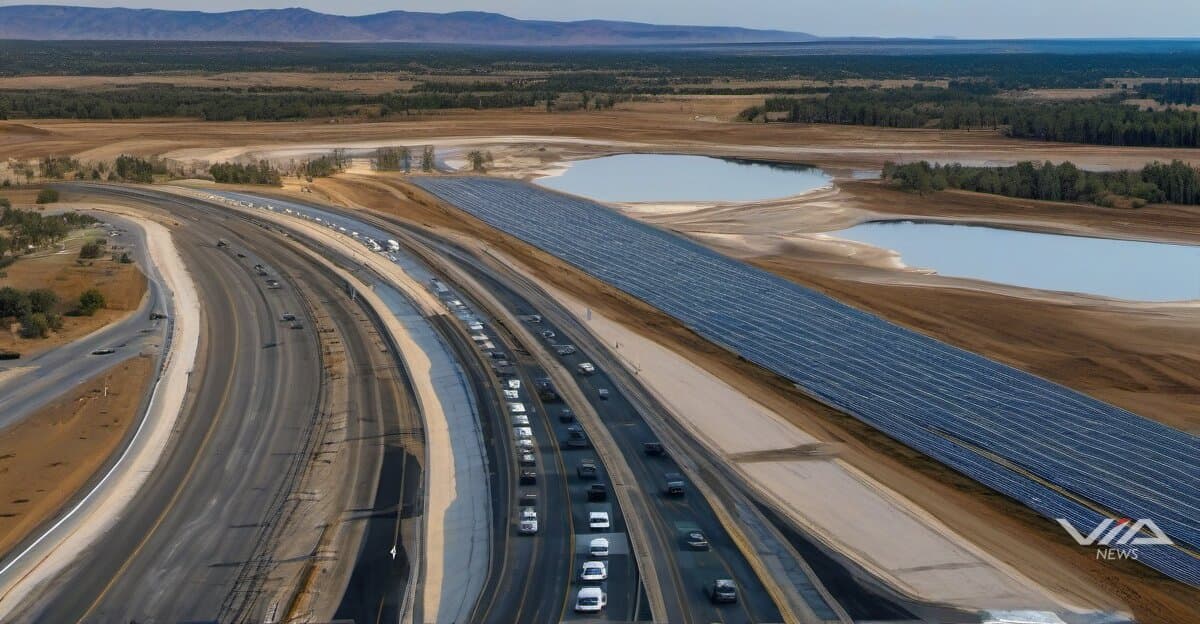
Image generated by AI for illustrative purposes. Not actual footage or photography from the reported events.

Alphabet increased its 2025 capital expenditure guidance to $91-93 billion, primarily targeting AI infrastructure. Amazon separately raised its capex to $125 billion for the same period. The combined spending from major cloud providers now exceeds $200 billion annually.

The infrastructure investments are already reshaping semiconductor supply chains. Anthropic committed to deploying 1 million Amazon Trainium2 chips for AI training workloads. OpenAI secured $250 billion in Microsoft Azure compute services, representing one of the largest cloud contracts in industry history.

Memory chip manufacturers are responding to the demand surge. Micron Technology announced plans to invest $24 billion in Singapore manufacturing facilities and expand global memory-chip production capacity. The investment targets high-bandwidth memory (HBM) crucial for AI accelerators.

The capital allocation shift marks a strategic bet on AI infrastructure returns. Hyperscalers are moving compute spending from operating expenses to capital expenditures, building owned infrastructure rather than renting capacity. This approach provides long-term cost advantages as AI workloads scale.

Semiconductor manufacturers face delivery timeline pressure. TSMC, NVIDIA, and AMD must coordinate capacity expansion to meet 2026 demand projections. Custom chip providers including Google's TPU and Amazon's Trainium teams are also ramping production.

The investment cycle differs from previous cloud buildouts. AI chips require specialized manufacturing processes, particularly for advanced packaging and HBM integration. Lead times for cutting-edge AI accelerators now stretch 12-18 months, forcing hyperscalers to commit capital years ahead of deployment.

Analysts project the infrastructure spending will sustain through 2027 as companies compete for AI compute leadership. The capital intensity creates barriers to entry, consolidating AI development among well-funded hyperscalers. Smaller companies increasingly rely on cloud AI services rather than building proprietary infrastructure.

In this story · Knowledge Files

What we know · the intelligence behind this page
Live from the substrate
What we're seeing
Q4 2026 Clinical Catalyst Season: Big-Pharma Data Flow, Regulatory Milestones, and a Thin AI-Drug Fringe
October 2026 conferences (EASD, IGCS, NACFC, HFSA) are producing a dense run of late-stage readouts from Novo Nordisk, Lilly, Roche, Bayer, Vertex and Galderma. Regulatory milestones are scheduled behind them: the ivonescimab BLA PDUFA date on 2026-11-14, FDA acceptance of Roche's vamikibart BLA, and Scholar Rock's EMA resubmission. The AI-and-finance angle is peripheral. It consists of the AI-designed drug Rentosertib and QAIAx, a speculative microcap whose trial claims (the QIII pilot, anticipated 2027-01-01, and a patent update) are forecasts and filings rather than data, so they warrant skepticism.
Our read on the data ›
Signals we're tracking
EPKINLY Regulatory-Clinical Success Cascade
High probability of expanded label indications, additional combination approvals, and competitive positioning strength in follicular lymphoma market. Predicts positive commercial uptake and potential accelerated review for related indications.
Patterns we're watching ›
Where sources disagree
ING Group
Both facts record the same metric (shares_outstanding) for ING Group at the identical observation date (2025-12-31). FACT A states 2,902,437,688 shares; FACT B states 2,902 million shares (2,902,000,000). The difference is 437,688 shares (~0.015%). This is a genuine value conflict, though the discrepancy appears to result from FACT B rounding to the nearest million while FACT A provides the precise count.
We flag conflicts openly ›
Recently verified
✓ Checked against the original source
4,986
facts traced to their source — and we flag the ones that don't hold up.
101 entities tracked4,986 facts checked against source5,375 source documents archived
Query this data → isubstrate.com