
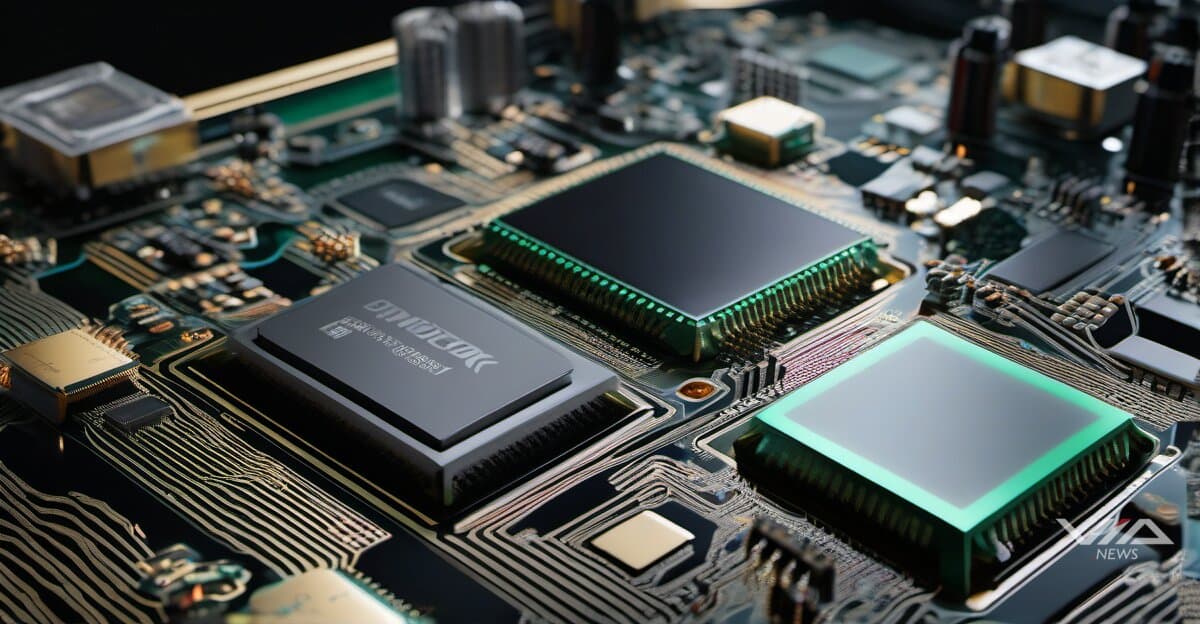
Nvidia shares rose 15% ahead of its earnings report and GTC 2026 conference, underscoring AI chip demand strength. The gains contrast sharply with struggles at traditional semiconductor makers.
Wolfspeed disclosed going concern doubts in recent filings, raising solvency questions. The company supplies silicon carbide semiconductors for EV onboard power systems and partners with Toyota and other automakers through Tier 1 suppliers. Silicon carbide handles high voltage in electric vehicles transitioning from combustion engines.
Memory chip markets show 3-4% oversupply according to GF Securities analysis. Lattice Semiconductor guided first-quarter revenue to $158-172 million. AXT forecast fourth-quarter revenue of $22.5-23.5 million, signaling weak demand for specialized semiconductor materials.
The divergence reflects structural shifts in chip demand. AI accelerators command premium pricing and tight supply, while legacy segments face capacity gluts. Automotive semiconductor demand remains uneven despite EV production growth.
Industry collaboration attempts to standardize emerging technologies. AMD, NXP, and ST backed Aliro 1.0, an open standard for digital access using NFC, Bluetooth Low Energy, and ultra-wideband chips. ST offers complete connectivity portfolios supporting all three Aliro configurations.
Luca Verre of ST cited decades of security and connectivity experience enabling faster development of next-generation access solutions. The standard targets smart locks, building access, and automotive entry systems.
High-accuracy GPS positioning emerged as another collaboration focus. Grab, OPPO, and Swift Navigation piloted precision location systems for mobile devices in Singapore. Francesco Grilli called the collaboration an important innovation for mobile positioning accuracy.
Quantum computing startups like Diraq represent long-term semiconductor opportunities beyond current AI and memory cycles. Inspire Semiconductor and other emerging players target niche applications as mainstream segments face oversupply.
The bifurcation creates financial winners and losers. AI-focused companies attract investment and maintain pricing power. Traditional players face margin pressure from oversupply and must navigate technology transitions while managing solvency risks.