
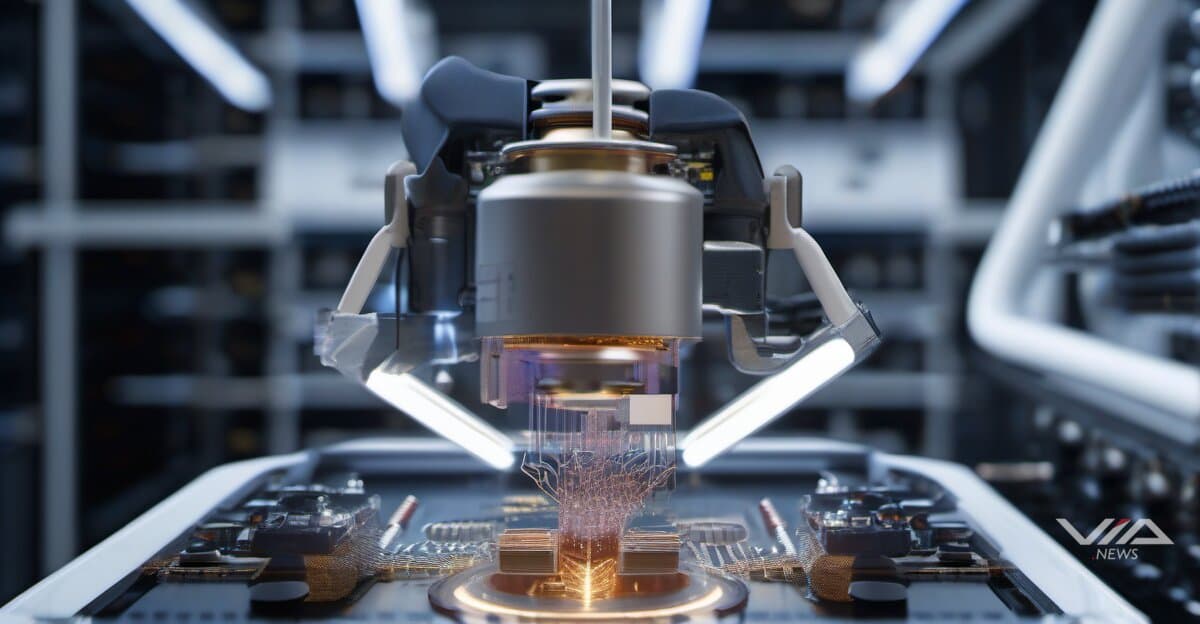
KLA Corporation forecasts mid-to-high teens growth in advanced packaging for calendar 2026, driven by AI accelerator production requirements. The equipment manufacturer's projection signals a fundamental shift in chip architecture spending as AI workloads demand higher interconnect density than traditional packaging methods provide.
Advanced packaging encompasses 2.5D and 3D technologies that stack multiple chiplets or integrate memory directly onto processor dies. AI accelerators from Nvidia, AMD, and other manufacturers rely on these techniques to achieve bandwidth requirements exceeding 1 TB/s between compute and memory components.
KLA's growth forecast significantly outperforms broader semiconductor equipment market expectations. Industry analysts project overall wafer fabrication equipment spending to grow in single digits for 2026, putting advanced packaging capital expenditure on a faster trajectory than front-end manufacturing.
The divergence reflects economic realities in chip design. Moving to smaller process nodes below 3nm costs $500 million or more per generation. Advanced packaging delivers performance improvements at 20-30% lower cost by combining chiplets manufactured on different process nodes.
Lumentum's quarterly results underscore packaging equipment demand. The company reported over 65% year-over-year revenue growth and projects quarterly revenue above $750 million next quarter. This performance suggests equipment suppliers across the packaging supply chain are experiencing similar order momentum.
The packaging equipment capex cycle differs from historical patterns. Previous growth spurts correlated with new smartphone or PC platform launches. Current investment is driven by data center operators deploying AI infrastructure with multi-year visibility. Hyperscalers including Microsoft, Google, and Amazon have committed over $200 billion combined in 2026 capital expenditure, with AI compute representing 40-50% of spending.
Market implications extend beyond equipment suppliers. Substrate manufacturers, thermal interface material producers, and testing equipment vendors all benefit from increased packaging complexity. OSATs (outsourced assembly and test providers) are expanding capacity, with ASE Technology and Amkor announcing $3 billion and $2 billion investments respectively.
The hypothesis that AI accelerator demand is driving sustained double-digit advanced packaging growth shows strong validation through KLA's guidance and peer company results. Equipment orders are growing faster than front-end capex, confirming a structural shift in semiconductor manufacturing spending allocation.