
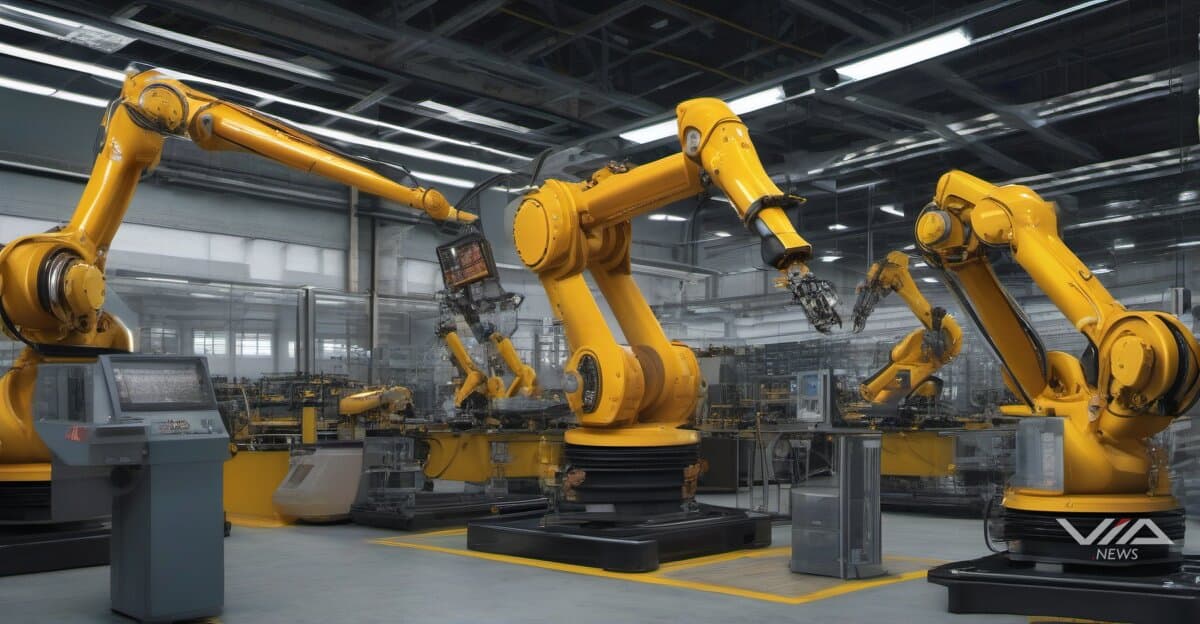
Industrial automation robot sales rose significantly in 2025, the International Federation of Robotics reported, as companies facing worker shortages turn to AI-enhanced automation. The trend is creating downstream demand for specialized computing hardware designed to power intelligent machines on factory floors.
CoreWeave projects capital expenditures will reach at least $30 billion in 2026, up from $15.4 billion in 2025, reflecting infrastructure investment to support AI workloads. Marvell Technology posted Q3 net revenue of $2.08 billion, indicating strong demand for data infrastructure components that enable automation systems.
AMD released its Ryzen AI 400 Series processors, the first chips designed specifically for Copilot+ AI experiences. "The desktop PC is evolving from tool to intelligent assistant," said Jack Huynh, AMD executive. The processors target edge computing applications where AI processing occurs locally rather than in centralized data centers.
The robotics buildout addresses two corporate pressures simultaneously: labor market tightness and operational cost control. Traditional automation handled repetitive tasks, but AI-enabled systems adapt to variable conditions without human intervention. This capability matters most in sectors where worker availability fluctuates or training costs remain high.
The shift creates investment opportunities in edge AI processors, which differ from cloud-focused chips. Factory automation requires real-time processing with minimal latency, driving demand for specialized hardware that handles AI inference locally. Companies supplying these components stand to benefit as manufacturers retrofit existing facilities and build new automated production lines.
Monitor industrial robot shipment volumes against edge AI processor sales to gauge adoption rates. The correlation between AI-enabled robotics deployment and infrastructure spending will indicate whether this trend sustains or represents a temporary spike driven by post-pandemic labor dynamics.