
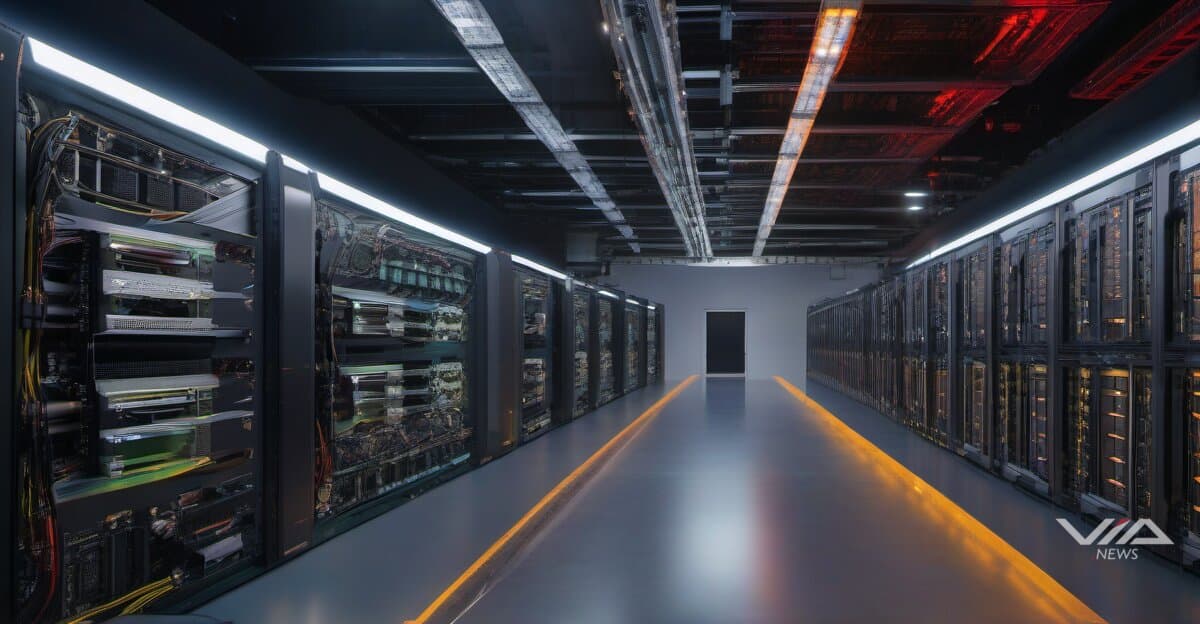
AMD has locked in multi-gigawatt AI infrastructure partnerships with Meta and Nutanix, marking a major push into hyperscale deployments dominated by NVIDIA. The deals center on AMD's 4nm PCIe 6 technology and Helios rack-scale architecture designed for power-intensive AI workloads.
Meta's commitment involves gigawatt-scale data center infrastructure, while Nutanix will deploy AMD hardware across its hybrid cloud platform. The partnerships position AMD as a viable alternative in enterprise AI spending, where companies are racing to secure computational capacity for large language models and machine learning operations.
AMD's Helios architecture packages GPUs, networking, and cooling into rack-scale units that reduce deployment complexity. The 4nm process node delivers power efficiency gains critical for data centers facing energy constraints. PCIe 6 doubles bandwidth to 128 GB/s, addressing bottlenecks in AI model training and inference.
Red Hat's collaboration extends AMD's reach into enterprise Linux environments, where most AI frameworks run. The partnership integrates AMD Instinct accelerators with Red Hat OpenShift, targeting financial services and healthcare organizations building private AI infrastructure.
AAIF membership has grown to include system integrators and cloud providers, expanding AMD's distribution beyond direct sales. The consortium standardizes AI deployment practices across AMD hardware, reducing integration costs for enterprises.
Adjacent infrastructure plays are emerging. Veea launched TerraFabric for edge AI deployments, enabling autonomous systems to run locally rather than in cloud data centers. The platform addresses latency requirements for manufacturing and logistics applications where millisecond response times matter.
Backblaze is expanding cloud storage capacity to support AI training datasets, which often exceed petabytes. Pure Storage's transition to Everpure, expected to close in Q2 FY27, consolidates enterprise storage vendors serving AI workloads.
The infrastructure buildout reflects AI's shift from research projects to production systems requiring dedicated hardware. Enterprise technology spending is concentrating on vendors that can deliver integrated compute, networking, and storage at scale. AMD's hyperscale partnerships mark its entry into a market where NVIDIA currently holds an estimated 80% share of AI accelerators.