
Thursday, October 15, 2026

Generation Mining faces cash crisis as Marathon Project stalls pre-production

Generation Mining Limited confronts going concern risk with depleted working capital and no production revenue. The copper-palladium developer's low stock price and mounting operational expenses threaten viability before Marathon Project financing materializes. Investor confidence in pre-production mining ventures faces renewed scrutiny.

Generation Mining faces cash crisis as Marathon Project stalls pre-production
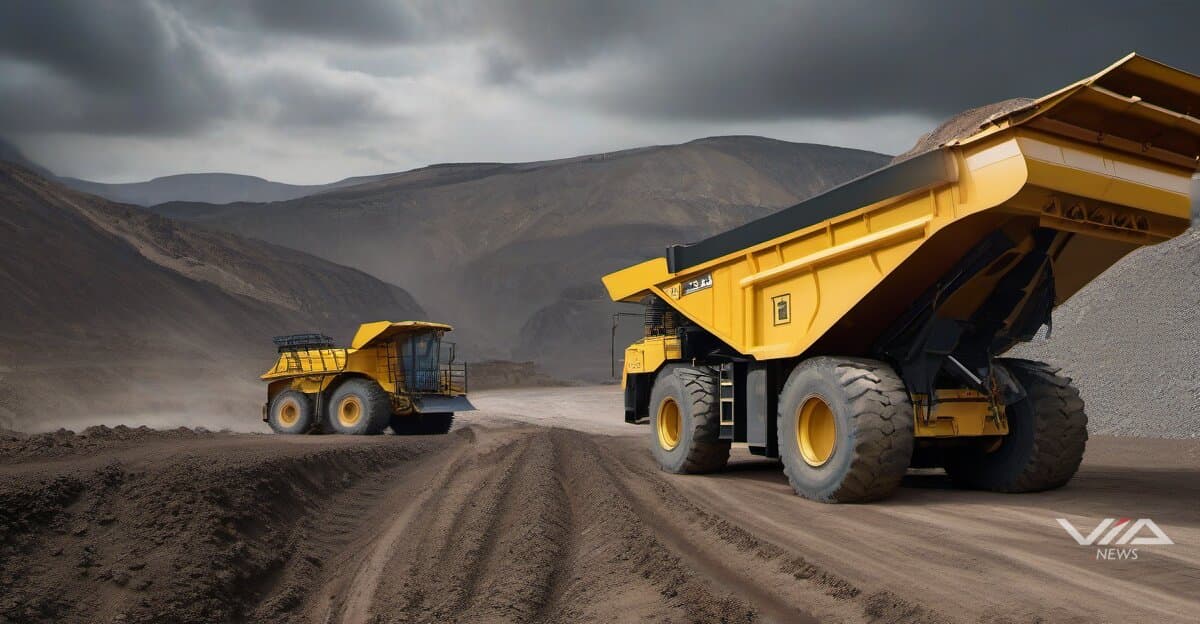
Image generated by AI for illustrative purposes. Not actual footage or photography from the reported events.

Generation Mining Limited faces critical liquidity shortfall as operational expenses drain working capital ahead of production at its Marathon Project copper-palladium deposit in Northwestern Ontario.

The mining developer operates in pre-production stage with zero revenue while maintaining full operational costs. Risk assessment shows 70% confidence in medium-likelihood catastrophic financial failure without immediate capital injection or project financing.

Going concern warnings in mining development typically emerge 12-18 months before insolvency. Generation Mining's compressed timeline leaves narrow window for capital raise or strategic partnership to bridge funding gap.

Marathon Project holds significance as one of Canada's largest undeveloped copper-palladium deposits. Copper demand projections show 40% supply deficit by 2030 driven by electrification and grid infrastructure. Project economics remain sound long-term despite short-term capital crisis.

Stock price decline compounds capital access challenges. Equity raises at suppressed valuations trigger shareholder dilution exceeding 50% in distressed scenarios. Debt financing options narrow for pre-revenue miners following 2024-2025 commodity market volatility.

Mining sector shows 23% failure rate for projects between feasibility study and production. Capital structure gaps kill projects with proven reserves when working capital depletes before production cash flows begin.

Generation Mining requires estimated $50-100 million bridge financing based on typical pre-production burn rates. Strategic options include offtake agreements with end-users, streaming deals with precious metal buyers, or joint venture with major mining operator.

Palladium market dynamics add complexity. Prices dropped 45% from 2022 peaks as automotive catalytic converter demand declined. Copper exposure provides project hedge but dual-metal economics complicate financing discussions.

Investor implications extend beyond Generation Mining. Junior mining sector trades at 15-year valuation lows as capital markets reassess pre-production risk premiums. Fund managers reduce exposure to development-stage miners lacking 24-month cash runways.

Marathon Project's technical merit remains intact. Liquidity crisis reflects capital markets dysfunction rather than asset quality deterioration. Resolution requires management execution on financing within 6-9 month window before going concern becomes acute.

What we know · the intelligence behind this page
Live from the substrate
What we're seeing
Q4 2026 Clinical Catalyst Season: Big-Pharma Data Flow, Regulatory Milestones, and a Thin AI-Drug Fringe
October 2026 conferences (EASD, IGCS, NACFC, HFSA) are producing a dense run of late-stage readouts from Novo Nordisk, Lilly, Roche, Bayer, Vertex and Galderma. Regulatory milestones are scheduled behind them: the ivonescimab BLA PDUFA date on 2026-11-14, FDA acceptance of Roche's vamikibart BLA, and Scholar Rock's EMA resubmission. The AI-and-finance angle is peripheral. It consists of the AI-designed drug Rentosertib and QAIAx, a speculative microcap whose trial claims (the QIII pilot, anticipated 2027-01-01, and a patent update) are forecasts and filings rather than data, so they warrant skepticism.
Our read on the data ›
Signals we're tracking
EPKINLY Regulatory-Clinical Success Cascade
High probability of expanded label indications, additional combination approvals, and competitive positioning strength in follicular lymphoma market. Predicts positive commercial uptake and potential accelerated review for related indications.
Patterns we're watching ›
Where sources disagree
ING Group
Both facts record the same metric (shares_outstanding) for ING Group at the identical observation date (2025-12-31). FACT A states 2,902,437,688 shares; FACT B states 2,902 million shares (2,902,000,000). The difference is 437,688 shares (~0.015%). This is a genuine value conflict, though the discrepancy appears to result from FACT B rounding to the nearest million while FACT A provides the precise count.
We flag conflicts openly ›
Recently verified
✓ Checked against the original source
4,986
facts traced to their source — and we flag the ones that don't hold up.
101 entities tracked4,986 facts checked against source5,375 source documents archived
Query this data → isubstrate.com