
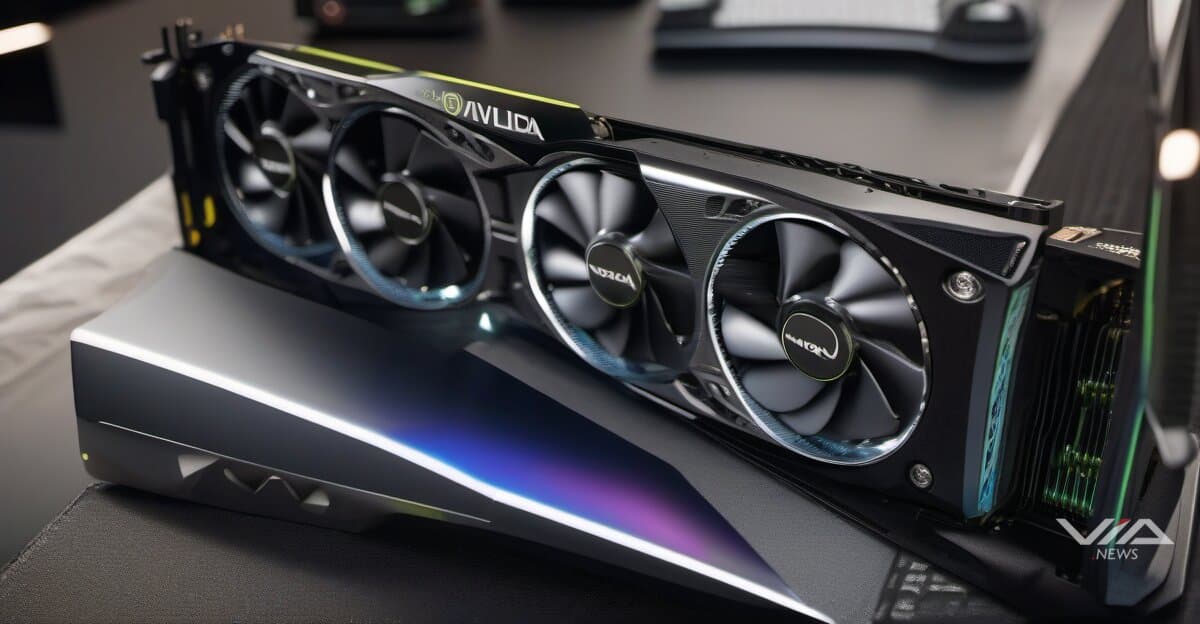
Nvidia reports Q4 2025 earnings on February 25, with analysts watching datacenter GPU shipments to gauge whether AI infrastructure spending can justify the chipmaker's $2 trillion market cap. The results will signal demand health across cloud providers and enterprise customers deploying large language models.
Broadcom's year-to-date gains through January 2025 indicate networking and custom AI accelerator demand held firm. Microsoft's Azure growth in Q3 fiscal 2025 (calendar Q1) drove continued capital expenditure on GPUs and accelerators, a trend hyperscalers must maintain to support generative AI workloads.
The test comes as competition broadens. Intel's Core Ultra Series 3 processors will power over 200 PC designs from global partners, pushing AI capabilities into consumer devices. Ensurge Micropower's microbattery technology targets edge AI devices, reflecting a shift toward distributed inference workloads that require less datacenter capacity.
Investors face a binary outcome on February 25. Strong Nvidia guidance would confirm datacenter buildouts continue through Q1 2026, supporting semiconductor equipment makers and memory suppliers. Weak shipment forecasts would suggest hyperscalers are pausing after two years of aggressive GPU purchases, pressuring valuations across the AI hardware stack.
Cloud capital expenditure announcements from Amazon Web Services, Google Cloud, and Microsoft Azure in their recent earnings calls showed no slowdown. AWS increased infrastructure spending 40% year-over-year in Q4 2024. Google parent Alphabet committed $75 billion to capex in 2025, much of it for AI training and inference chips.
The datacenter GPU market splits between training chips for frontier models and inference accelerators for deployed applications. Nvidia dominates training with H100 and H200 GPUs. Custom inference chips from Google, Amazon, and startups threaten lower-margin segments. Nvidia's earnings will show whether its inference revenue can offset any training slowdown.
Analyst consensus expects Nvidia Q4 revenue of $37 billion, up 70% year-over-year but decelerating from prior quarters. Guidance for Q1 2026 matters more than backward-looking results. Any revenue forecast below $35 billion would trigger semiconductor sector selloffs.