
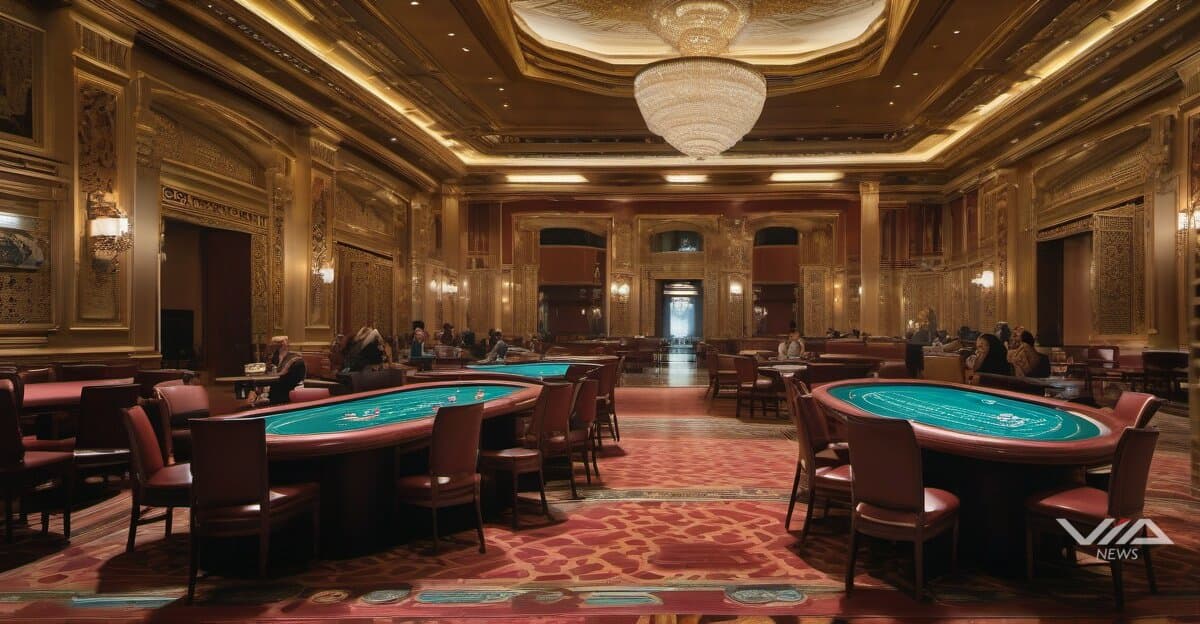
Chinese authorities are escalating regulatory pressure on cross-border gambling operations, threatening to sever capital flows that funnel an estimated $2.8 billion monthly through Macao's casino industry.
The Parisian Macao and other Las Vegas Sands properties face catastrophic operational risk as Beijing considers restrictions on mainland visitor access and financial transactions tied to gaming. Mainland Chinese visitors generated 71% of Macao's gross gaming revenue in 2025, making any access barriers existential for casino operators.
Cross-border capital controls present the most immediate financial threat. Chinese regulators have already limited UnionPay card withdrawals at Macao ATMs to ¥50,000 ($7,000) per person annually. Further restrictions could block WeChat Pay and Alipay transactions at casino cages, cutting off the primary funding mechanism for VIP gaming segments that drive 40% of sector profits.
Las Vegas Sands reported $1.2 billion in Macao revenue for Q4 2025, down 8% year-over-year amid earlier regulatory warnings. MGM China and Wynn Macau have seen similar declines as Beijing's anti-corruption campaigns target government officials and state-owned enterprise executives who previously formed the core VIP customer base.
The regulatory tightening extends beyond capital flows. Beijing is reportedly drafting visitor permit restrictions that would require mainland Chinese to demonstrate legitimate business purposes before entering Macao. Current visa-free access allows 48-hour stays for Guangdong province residents and visa-on-arrival for other mainland visitors.
Macao gaming concessions renewed in 2022 included commitments to reduce gaming floor space and increase non-gaming amenities. The Parisian Macao has invested $300 million in retail and entertainment facilities to comply. Those investments lose value if visitor flows drop.
Currency exposure amplifies the risk. Macao casinos operate in Macanese patacas pegged to Hong Kong dollars, while mainland revenue depends on renminbi accessibility. Capital controls that prevent RMB conversion strand operator revenue in restricted accounts.
Investor confidence is eroding. Las Vegas Sands stock has dropped 14% since February 15 when Bloomberg reported Beijing was reviewing Macao gaming policies. Credit default swap spreads on Sands China debt widened 82 basis points to 240 bps, pricing in elevated default risk.
Historical precedent suggests the threat is substantial: China banned group tours to Taiwan in 2019 and Hong Kong in 2020 when political tensions rose. Macao's gaming dependence makes it similarly vulnerable to Beijing's policy shifts.