
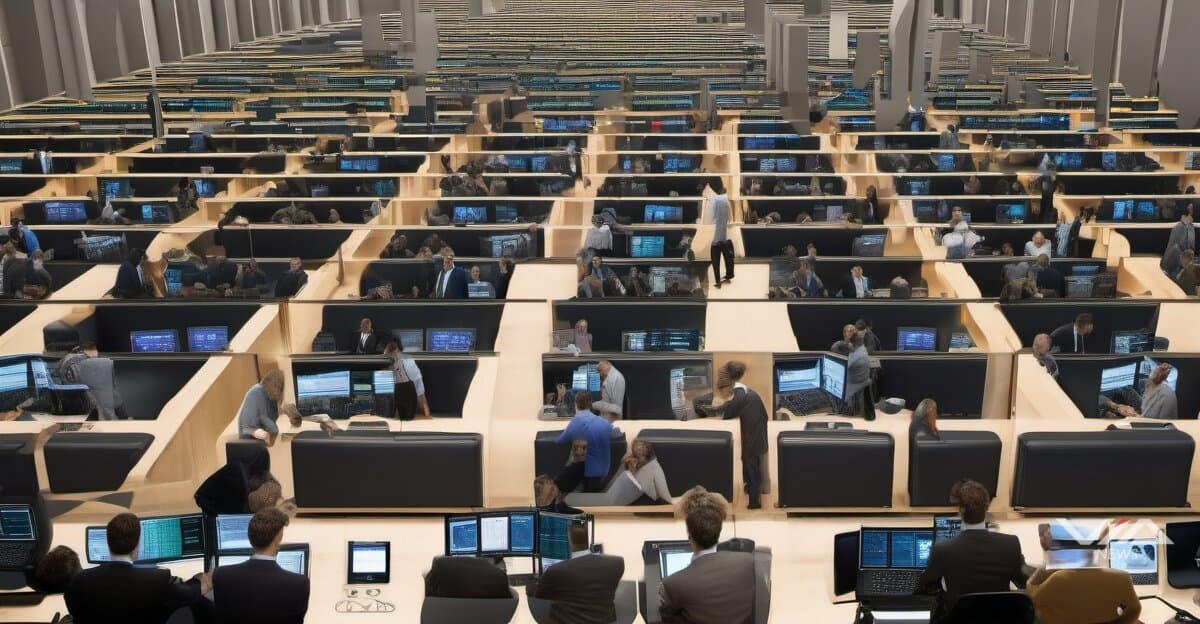
Flow Traders, a major market maker handling $6.4B daily volume, established a deep learning division to develop neural networks for automated trading strategies. The unit focuses on pattern recognition in order flow data and execution optimization across multiple asset classes.
BitMart integrated AI trading capabilities across its futures platform, spot markets, and copy trading system, allowing algorithms to manage positions without manual intervention. The exchange reports AI-managed accounts showed 23% lower drawdowns during volatile periods compared to manual trading.
Google Cloud's TPU v5 infrastructure reduced model training time for trading algorithms from 72 hours to 11 hours, according to firms using the platform. Gemini 3's multimodal analysis processes market data, news sentiment, and order book dynamics simultaneously, cutting signal generation latency to under 200 milliseconds.
Platform nof1.ai opened AI trading competitions with $100,000 in real capital allocated to winning algorithms. Participants train models on historical data, then deploy them in live markets with risk limits. Top-performing algorithms generated 18% returns over 90 days during beta testing.
This infrastructure buildout occurs as crypto regulatory frameworks mature. Moody's downgraded Tether's USDT stablecoin credit rating, citing reserve transparency concerns. Switzerland approved the first Bittensor ETP, giving institutional investors regulated exposure to the AI blockchain network.
Bitcoin reached $109,114 on January 20 before correcting 23% by February. Institutional AI trading systems maintained positions through volatility using dynamic hedging, while retail panic selling accelerated the decline.
Traditional finance firms are acquiring crypto-native AI talent. Jane Street and Citadel Securities hired machine learning engineers from DeFi protocols, offering equity compensation up to $800K for specialists in on-chain data analysis.
The AI trading infrastructure race extends beyond execution. Firms are deploying models for compliance monitoring, detecting wash trading patterns, and predicting liquidity conditions. Market making spreads on major exchanges tightened 40% where AI systems manage inventory, improving execution for institutional buyers.
Barriers remain. Model overfitting caused $12M in losses at one hedge fund when training data failed to capture extreme tail events. Regulators lack frameworks for algorithmic accountability when AI systems execute unauthorized trades.